

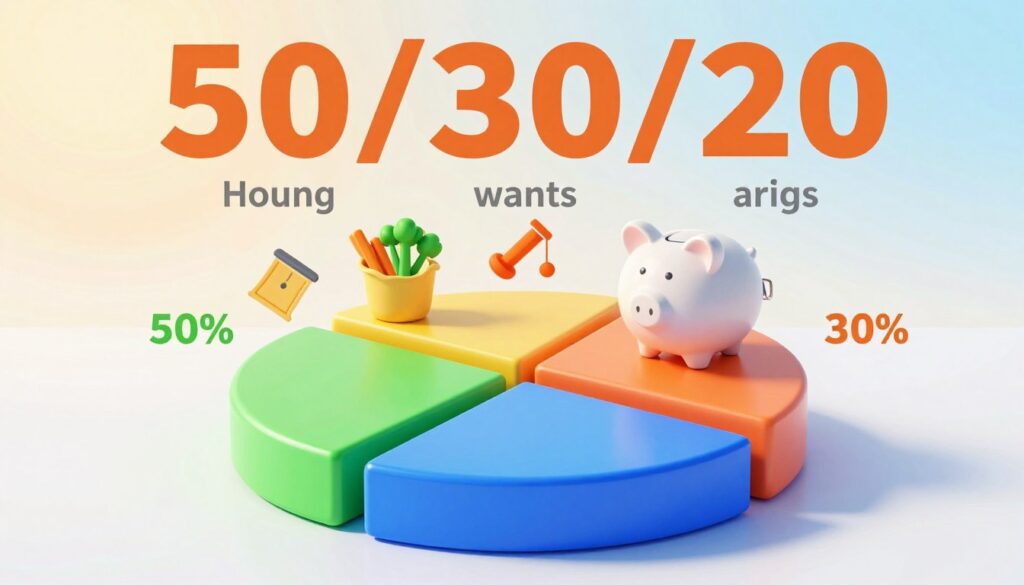
This simple plan divides monthly after-tax income into three clear parts. Fifty percent covers essentials like rent, utilities, and groceries. Thirty percent goes toward wants, and twenty percent funds savings or debt payoff.
Using this framework helps you manage money with less guesswork. It gives a clear method to balance living costs and goals while keeping life comfortable. Many find it easier to follow than complex systems.
Flexibility matters: adjust percentages to fit a unique financial situation or changing income. The 50/30 /20 approach works with any monthly after-tax amount and keeps focus on priorities without stress.
Key Takeaways
- Simple split: 50% needs, 30% wants, 20% savings.
- Clear focus: ensures essentials come first.
- Flexible: adapts to different incomes and goals.
- Easy to use: percentage-based allocations reduce complexity.
- Long-term help: supports stable financial situation over time.
Understanding the Basics of Financial Planning
Splitting pay into set portions gives fast clarity about monthly cash flow. The 50/30/20 rule, created by Elizabeth Warren, offers a simple path for managing income and expenses without stress.
Start with after-tax income. Divide take-home pay so needs stay covered, wants remain fun, and savings grow. This makes healthy spending habits easier to form.

Practical benefits: steady savings, clearer view of finances, and predictable monthly after-tax flow. Consistency helps your financial situation improve over time.
“Designed to help people overwhelmed by complex systems, this approach keeps priorities clear.”
| Category | Purpose | Example |
|---|---|---|
| Needs | Cover essentials and regular expenses | Rent, utilities, groceries |
| Wants | Allow flexible, discretionary spend | Dining out, hobbies |
| Savings | Build emergency fund and pay down debt | Automatic transfers, retirement |
For step-by-step ideas on boosting savings and better ways to save, read this best way to save money. Small changes to spending habits lead to big results.
What is the fifty thirty twenty budgeting rule
Organizing income into set buckets helps you see where dollars really go.
The Core Philosophy
This method divides after-tax income into three clear parts: half for needs, thirty percent for wants, and twenty percent for savings. That simple split keeps essentials covered before extras.
You might find that sorting recurring expenses into those three categories makes tracking spending habits easier. When rent, utilities, groceries, and other needs sit in one place, it becomes simple to spot where savings can grow.
Benefits of Simplicity
Less time tracking every purchase. The 50/30/20 rule removes the need to log each small expense. Instead, it gives a big-picture budget that helps you spend money without guilt.
- Clear priorities for needs, wants, savings.
- Practical examples for balancing lifestyle and long-term goals.
- Easy to automate transfers to a savings account.
“A straightforward split like this lets you enjoy life while your savings grow.”
| Category | Primary focus | Examples |
|---|---|---|
| Needs (50%) | Cover core expenses | Rent, utilities, groceries |
| Wants (30%) | Discretionary living | Dining out, subscriptions |
| Savings (20%) | Future goals and safety | Emergency fund, retirement account |
Allocating Funds for Essential Needs
Start by listing every recurring charge that keeps your household running each month. That list becomes the foundation of your plan and helps you see which monthly expenses must be covered first.

Defining Routine Expenses
Needs cover non-negotiable payments such as your mortgage, utility bills, groceries, and student loan installments. Treat minimum required debt payment as part of this group so you protect credit and stability.
Count insurance premiums, transportation costs, and basic food costs here too. If these things push past half of your after-tax income, track each line item to spot savings opportunities.
Practical examples help: monthly mortgage payment, utility bills, and student loan payments are classic needs. Use the 50/30 /20 budget to prioritize these payments, then allocate remaining funds to wants and savings.
- List recurring charges and total them each month.
- Separate essentials from discretionary spending.
- Adjust if needs exceed 50% by reducing nonessential expenses or increasing income.
For guidance on how much to set aside from each paycheck, see this how much of your paycheck should you.
Managing Discretionary Spending on Wants
You can treat leisure expenses as planned rewards instead of impulse buys. That mindset helps keep fun items inside a clear monthly budget while still protecting long-term savings.
Wants are discretionary things you choose to pay for, like dining out, gym memberships, or streaming subscriptions. Aim to limit this category to about 30% of take-home pay under a 50/30 /20 budget.

When money gets tight, look here first for cuts. Trim subscriptions, delay nonessential purchases, or pick lower-cost alternatives. Small swaps add up fast and boost savings without major lifestyle pain.
- Keep a short list of regular leisure expenses.
- Set a monthly cap so you still enjoy life.
- Use one card or account for wants to track easily.
For quick, practical ways to free up cash and save more, read tips that show how to save money fast.
Prioritizing Long-Term Savings Goals
Treat savings like a monthly bill and make steady progress toward long-term goals. Set aside a fixed share of income so plans such as a home purchase or retirement move forward without guesswork.

Building an Emergency Fund
An emergency fund protects you from surprise costs and job loss. Aim to save several months of living costs so monthly expenses do not derail plans.
- Allocate 20% of income to your savings bucket to accelerate progress.
- Use this fund for true emergencies, not routine wants or nonessential purchases.
- Keep funds liquid in a high-yield savings account for quick access.
Retirement Contributions
Contribute to a 401(k) or IRA as part of your savings plan. Employer matches are free money; prioritize them when available.
Balance present needs and future security so you enjoy life now while funding long-term goals. For guidance on how much to save per paycheck, see how much to save from each.
“Saving regularly builds confidence and financial freedom.”
Strategies for Automating Your Monthly Finances
Automated money flows remove manual steps and keep progress steady each month.

Use automation to protect your priorities. Set transfers so a portion of pay lands in savings before you can spend it. This keeps a steady pace toward your goals without daily effort.
Many employers let you split income between checking and a savings account at deposit. Combine that with bank tools to send extra funds on payday. Citizens Bank offers automatic transfers that make it simple to grow savings and build an emergency fund.
- Automate regular transfers to meet savings goals every month.
- Use separate accounts so daily spending stays in checking.
- Put retirement or long-term goals on autopilot with recurring moves.
“When your finances run on autopilot, bills stay paid and savings quietly grow.”
| Account | Primary use | Benefit |
|---|---|---|
| Checking | Daily bills and cards | Easy access for routine spending |
| Savings | Emergency fund, short goals | Separated funds reduce impulse spend |
| Investment | Retirement, long-term goals | Builds future security automatically |
Bottom line: let technology move money for you. This small change aligns a simple budget with steady savings and less stress.
Making Adjustments for Your Unique Situation
Personal finance plans must flex when life changes. If essential costs or loan balances grow, you should make adjustments so bills stay current and goals stay on track.

Handling Debt Obligations
If you carry strong debt loads, prioritize required payments before extras. For example, high-interest credit cards or large student balances may need faster paydown.
You can make adjustments to the 50/30/20 approach. One practical example is a 75/5/20 split that favors clearing credit balances while still saving.
- Reduce wants temporarily so required payments and a mortgage stay covered.
- After a raise, adjust percentages to boost savings rather than increase spending.
- Always keep needs and debt payments first; treat savings as non-negotiable when possible.
| Scenario | Short-term split | Goal |
|---|---|---|
| High credit card balances | 75/5/20 | Speedy payoff |
| Mortgage heavy month | 60/20/20 | Cover needs |
| Pay raise received | 50/30/20 → adjust | Increase savings |
“Flexibility keeps you solvent and moving toward long-term savings.”
Essential Tools for Tracking Your Progress
A single dashboard can turn scattered transaction info into actionable insight.

The Hancock Whitney mobile app gathers checking and savings data so you can review progress without extra work. Use it to see balances, recent charges, and automated transfers at a glance.
Using a mobile app like this provides the information contained herein to help you track progress effectively. It keeps account details organized and accessible on your phone.
- Viewing both account types in one place makes reviewing spending simple.
- Transaction detail gives the precise information contained herein needed to keep a healthy budget and protect savings.
- Regular checks help ensure your money habits match goals and the rule you follow.
These digital tools are designed to simplify life by offering clear reports and alerts. By reviewing accounts often you keep small issues from growing and keep savings moving forward.
Best ways to save money offers extra tips that pair well with app tracking and organized account views.
Conclusion
A clear plan helps protect essentials while you still enjoy life. This simple rule balances needs, wants, and steady savings to keep your budget manageable.
Track monthly expenses so you spot leaks and keep income aligned with priorities. Small, regular moves toward an emergency fund create real safety for surprise costs.
Adjust as life changes: tweak percentages, shift funds, or pause wants when needed. Consistent savings, even modest amounts, add up over time.
Stay patient and kind to yourself. Find a setup you can keep, and you’ll build lasting financial confidence and a stronger emergency plan.
FAQ
What does the 50/30/20 approach recommend?
How do I categorize routine expenses?
Can discretionary spending include subscriptions and travel?
How should I prioritize savings and debt?
What size emergency fund should I build?
How do I automate monthly finances?
What if my financial situation doesn’t fit the percentages?
How should I handle student loans or a mortgage?
What tools help track progress?
Can I use more than one savings account?
When should I re-evaluate my plan?
Are there limits on spending freedom with this framework?


