

Choosing a clear plan can change how fast you regain control of your money. Many Americans feel anxious about finances; a 59% rate of worry shows this is a common stress point. This short guide helps you pick an approach that suits your goals.
One route aims at quick wins to build momentum. The other targets high interest first to save money over time. Both seek the same end: lower balances and less interest paid.
We will compare each approach, focusing on how they handle interest and motivation. By the end, you can choose a path that matches your habits and goals in the United States.
Key Takeaways
- Picking a plan affects both pace and total interest paid.
- Quick wins can boost motivation and stickiness.
- Targeting high interest lowers long-term costs.
- Balance personal behavior with numbers to pick a fit.
- Small, steady payments lead to lasting progress.
Understanding the Snowball vs Avalanche Method for Debt
Two common repayment paths take very different routes: one attacks highest rates to cut interest, the other clears small balances fast to build momentum.
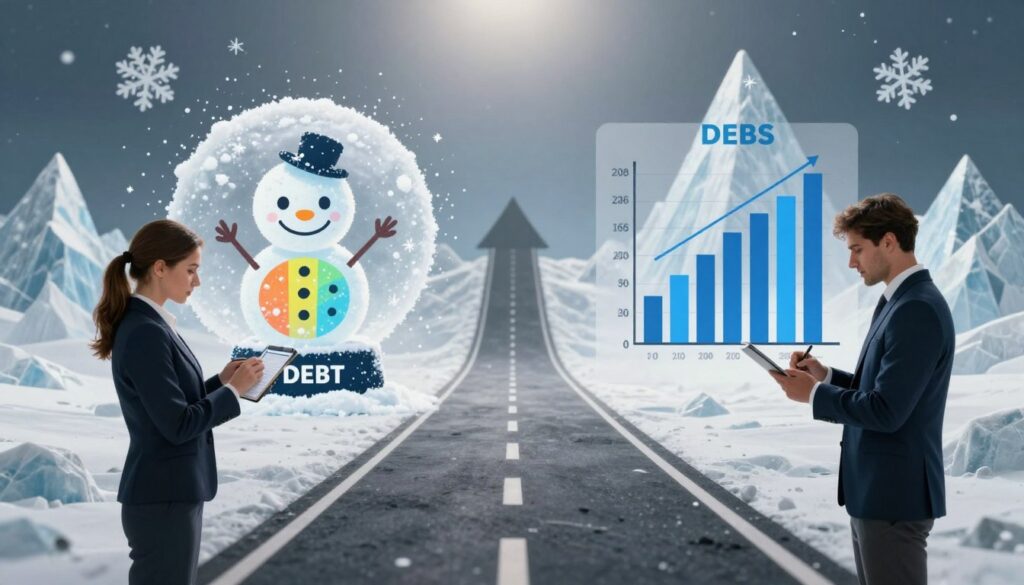
A math-first approach directs extra dollars to the account with the highest rate. That strategy reduces total interest paid over time and can save hundreds if you stay focused.
An emotional win approach targets the smallest balance first. Paying off an entire account quickly gives a visible victory and often boosts persistence.
- Both plans require paying minimums on all accounts while funneling extra cash to one target.
- Pick savings on interest if numbers guide you, or pick quick wins if momentum keeps you on track.
Either way, steady payments lead to freedom. If you need tips on trimming expenses to free up extra funds, see ways to save money.
Assessing Your Current Financial Situation
Begin with a full snapshot: list each balance, interest figure, and monthly obligation so you know your exact situation.
Listing your debts
Write down every account: credit card balances, personal loans, student loans, and car loans. Add each interest rate and the minimum monthly payment.
Tip: Use the Fidelity debt tool to sort accounts by rate or balance. That makes it easy to see totals and plan which account to tackle first.

Calculating your disposable income
Add your net monthly income, then subtract essentials like rent, utilities, and groceries. What remains is your available money for extra repayment.
Always confirm you can cover the minimum on every account to protect your credit score while you accelerate payments on one target.
- List every balance, rate, and payment to avoid surprises.
- Organize figures with tools like Fidelity to get clarity fast.
- Be honest about your budget so you know if extra funds exist to speed up progress.
Need help freeing up extra cash? Check practical tips at best ways to save money.
Deep Dive into the Debt Avalanche Method
When you order accounts by APR and attack the priciest one, savings add up fast. This section explains how a rate-first plan works and why it can cut long-term costs.
How the strategy works
Start by listing each balance and its APR. Keep minimums on every account. Then apply extra money to the account with the debt highest interest until it is cleared.
This requires steady discipline. Results show that steady extra payments slice both payoff time and total interest.

| Scenario | Total Balance | Years to Pay | Total Interest |
|---|---|---|---|
| Minimum payments only | $130,000 | 12 | $57,249 |
| Extra $100/month to highest interest | $130,000 | 9 | $45,340 |
| Notes | Applying $100/month saved about $5,750 on one loan and shortened time by 3 years. | ||
Bottom line: The debt avalanche method targets highest interest rate accounts first to lower interest paid and shorten payoff time while keeping focus on credit card debt and other high-APR loans.
Exploring the Debt Snowball Method
A behavior-driven approach targets the smallest balances first to build wins fast and keep momentum.

Start by listing every account and its balance. Keep minimums on all other accounts, then apply extra cash to the smallest balance until it clears.
For example, with a $10,000 credit card, a $9,000 car loan, and a $15,000 student loan, you would tackle the $9,000 car loan first. Although this path may cost about $500 more in interest compared to a rate-first plan,
“Clearing one account quickly often creates the motivation to keep going.”
You keep paying minimums on every other account while pushing extra funds at the current target. When an account is paid off, redirect that payment to the next smallest balance. This builds an expanding payment “snowball” that speeds payoff over time.
Tip: Trim small expenses or monetize a side skill to free up extra cash. For ideas on earning or tightening a budget, see dropshipping tips.
Comparing Interest Savings and Motivation
Choosing a repayment path means weighing long-term savings against short-term wins.

Mike Rusinak, a CFP and vice president at Fidelity, notes that if your accounts have similar interest rate levels, the avalanche method may not be much more efficient than the snowball method.
Numbers-first strategy usually wins on total interest saved. Paying higher rates first cuts how much you hand over in interest and shortens payoff time.
Behavior-first approach often wins at motivation. Clearing small balances gives quick wins and boosts consistency.
“If small wins keep you engaged, that path may be the most effective way to become debt-free.”
| Factor | Interest Savings | Motivation |
|---|---|---|
| avalanche method | High — lowers total interest | Moderate — needs discipline |
| snowball method | Lower — may cost more interest | High — builds momentum fast |
Pick the strategy that fits your habits. If you want ideas to free up cash, see best way to save money.
Factors Influencing Your Repayment Strategy
Pick a plan that fits both your temperament and your numbers. Personal habits, interest, and long-term goals all matter when choosing a repayment approach.

Your personal motivation needs
Motivation drives follow-through. Some people need frequent wins to stay engaged. Others prefer steady progress shown on a spreadsheet.
Be honest about what keeps you moving. If small balances cleared quickly help you stick with payments, lean into that.
Impact of interest rates
High interest can blow up total costs fast, especially with credit cards and other high-rate loans.
Check each account for its APR and any prepayment penalties before you commit. That simple step protects your savings.
Long-term financial goals
Think about plans like buying a home or building retirement savings.
Reducing balances improves cash flow and may speed progress toward those goals.
- Match motivation with math: balance small wins and interest savings.
- Confirm there are no penalties in loan contracts that erase interest benefits.
- Prioritize steps that free money for future goals while keeping you consistent.
“Balancing emotion and arithmetic helps you pick a sustainable path.”
Preparing Your Budget for Debt Repayment
Knowing how much spare money you have each month is the first step to faster payoff. Start by listing income and all essential bills. That reveals the exact amount you can safely put toward balances.

Keep payments consistent. Missing a minimum payment on a credit or loan hurts your score and raises costs. Make a schedule and set reminders so every required payment posts on time.
Next, check discretionary income. If you have room, add extra to your regular plan to accelerate progress. If money is tight, find one small expense to cut or earn a little extra until you free more funds.
- Identify how much money you can apply after essentials.
- Protect your credit by making every minimum payment on schedule.
- Build an emergency fund of three to six months to avoid new borrowing.
“A simple, steady budget makes either repayment method work better and saves interest over time.”
The Role of Debt Consolidation
Rolling several high-rate accounts into one lower-rate loan may speed progress and cut costs. Consolidation can simplify monthly tracking and reduce stress while you work toward your goals.

When to consider a consolidation loan
Consider a personal loan when you have multiple high-rate credit balances and steady income. A single payment can replace several minimums and often carries a fixed interest rate.
- Simplify payments: One monthly payment can reduce missed due dates and anxiety.
- Lower interest: If a personal loan offers a lower APR than current cards, it may save money over time.
- Stress relief: Discover found 85% of surveyed customers felt less stressed after consolidating into a single personal loan.
But compare totals. Add up fees and interest across options before accepting any loan. A useful step is to compare the total cost of a consolidation loan against continuing with other repayment choices.
“Consolidation is not a magic fix, but it can be a practical tool to manage balances while you pursue long-term goals.”
For tips on freeing extra cash and boosting savings to support any plan, see extra savings ideas.
Maintaining Momentum on Your Financial Journey
Momentum, not speed, often decides whether you finish a long payoff journey. Keep focus when a large student or credit balance stretches across months or years.

Celebrate small wins. Paying off a single account or hitting a savings milestone gives a real boost. These moments help you stick with a chosen method and reduce anxiety over time.
Avoid new borrowing. Adding fresh balances slows progress and increases interest you pay. Protect your credit by saying no to new cards or loans until balances shrink.
If motivation falls, review your original goals and why you picked this method. A clear reminder of long-term gains makes daily effort feel worthwhile.
“Consistent effort over time is the most reliable way to reach financial freedom.”
Practical tip: Free up money and stay steady by trimming small expenses. For quick ideas, check helpful tips on saving money that fit a busy U.S. budget.
Conclusion
A solid repayment path turns small steps into lasting financial change.
Both snowball and avalanche choices offer real routes out of debt. One gives fast wins that boost morale, while the other cuts total interest and saves money over time.
Pick the plan that fits your habits and stay consistent with payments. Avoid new balances and track progress so momentum builds.
Start today: list balances and rates, choose a plan, and use simple tips for saving money to free extra cash. Small steps add up to freedom.
FAQ
Which plan saves more money in interest — avalanche or snowball?
How do I decide which strategy fits my personality?
Can I mix both strategies?
What counts as "extra" payment and how should I allocate it?
Do these strategies apply to student loans, mortgages, and personal loans?
When is consolidation a smart move?
How do I list debts and calculate disposable income?
Will focusing on lowest balances hurt my credit score?
How much time will it take to be debt-free using either plan?
What are common pitfalls to avoid while using these strategies?


