

Growing a predictable sales pipeline starts with attracting the right people.
Lead generation is the process of drawing visitors to your website, offering value, and turning interest into contact information. A true lead volunteers their details because your offer—an ebook, trial, or newsletter—resonated with their needs.
Inbound channels like SEO, content, social media, and email warm potential customers more naturally than cold outreach. The usual funnel looks like this: visitors → CTA → landing page → form → offer. Follow capture best practices and you create a steady flow of qualified leads.
This guide walks from the definition of a lead to funnel stages, magnets, landing pages, nurturing, scoring, B2B nuances, measurement, and compliance. You’ll learn to build a scalable program that aligns with sales and drives predictable pipeline growth.
The U.S. media landscape is crowded, so relevance, transparency, and trust matter more than ever. Sustainable growth relies on compounding channels that keep producing results even when paid ads pause.
Ready to start? Try a short course to practical tactics at your free course.
Key Takeaways
- A lead is someone who gives contact information because your value proposition worked.
- Inbound channels (SEO, content, email) warm buyers better than cold lists.
- Follow the visitors → CTA → landing page → form → offer funnel to capture leads.
- Focus on qualified leads that convert, not just raw numbers.
- Sustainable growth comes from compounding channels that keep producing over time.
What Is Lead Generation? A Friendly, Modern Definition
Modern customer outreach begins when someone willingly hands over information in exchange for something helpful.
In plain terms, this process draws people in with useful content and experiences until they share contact details. A single contact is someone who shows interest by giving name, email, or other information. That exchange starts a relationship your team can nurture.

Lead vs. prospect: What’s the real difference?
A contact becomes a prospect after qualification. A contact simply signals interest. A prospect fits your buyer personas and is ready for deeper sales outreach.
Current context: Why this matters now
Buyers research on their own terms. Useful content, trials, downloads, and newsletter sign-ups earn trust faster than interruptive ads. Properly captured information makes follow-up timely and relevant, which boosts conversion.
- Examples: ebook downloads, free trials, coupons, event sign-ups.
- Why it works: inbound marketing attracts first, then converts, not the other way around.
- Outcome: better customers, lower acquisition costs, sustainable growth.
Types of Leads and Where They Fit in Your Sales Funnel
Not all prospects are the same; each type needs its own follow-up plan and timing. Clear definitions help marketing and sales work together and reduce missed opportunities.
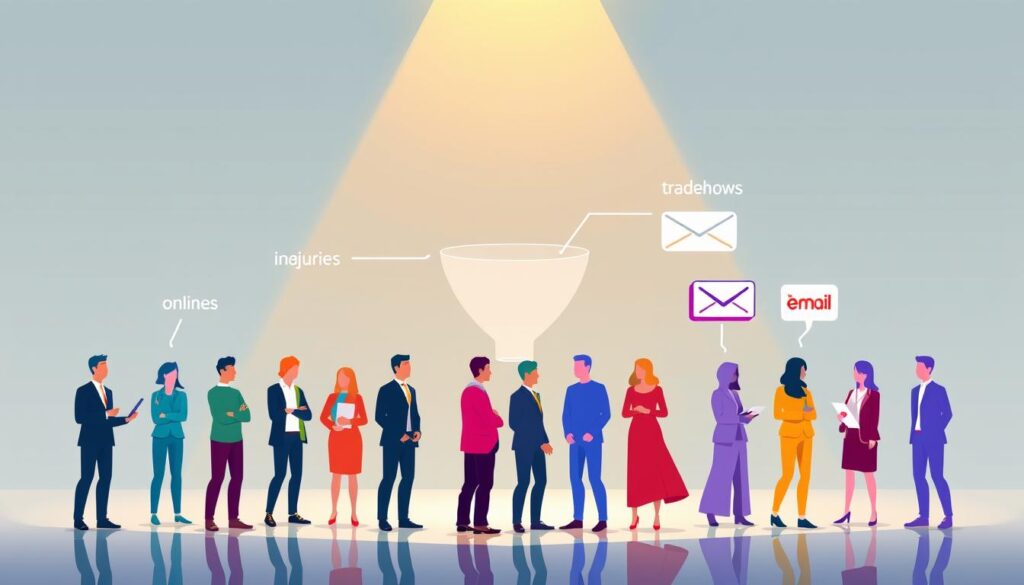
Marketing Qualified
Marketing Qualified contacts engage with content—like downloading an ebook or filling a landing page form. They show interest but usually aren’t ready for direct sales outreach.
Sales Qualified
Sales Qualified contacts take actions that signal purchase intent, such as asking about pricing or completing a product inquiry form. These are prime candidates for a timely sales call.
Product Qualified
PQLs come from product-led motions. Hands-on usage in a free trial or freemium account, plus behaviors like frequent use or premium feature clicks, predict upgrades.
Service Qualified
These surface in support interactions. A customer asking for more seats or an upgrade during a chat becomes a Service Qualified contact and should be passed to sales smoothly.
- Example: ebook download = Marketing Qualified.
- Example: pricing question form = Sales Qualified.
- Example: upgrade request during trial = Product Qualified.
- Example: support chat asking for more seats = Service Qualified.
Tip: Keep definitions consistent in your CRM and capture strong lead information (form fields plus behavior data). This improves scoring accuracy and speeds SLA-driven handoffs.
Why Lead Generation Fuels Sustainable Growth
A steady stream of identified visitors turns uncertainty into a predictable roadmap for the business. When anonymous traffic becomes known contacts, teams can forecast revenue and plan campaigns with confidence.

From a click to a paying customer
First, a visitor finds your channel and clicks a clear CTA. They reach a landing page, receive a compelling offer, and fill a form to exchange information.
Each micro-conversion matters: CTA click, landing view, form completion, and the first email open. Together these capture signals that marketing and sales use to prioritize follow-up.
- Connect anonymous visitors to known contacts and then to customers through tracked steps.
- Maintain a steady pipeline so revenue forecasts stay stable during seasonal dips.
- Use helpful content to build trust and improve conversion at every stage.
- Let analytics convert clicks and form fills into behavior insights for smarter campaigns.
Discipline wins: attract, capture, nurture, qualify, convert—repeat reliably to scale growth and protect brand reputation.
The Lead Generation Process: Attract, Capture, Nurture, Qualify, Convert
A repeatable process turns casual visitors into customers by combining useful content, targeted SEO, and timely offers.

Attracting the right target audience
Start with high-value content and on-page SEO to increase visibility in search engines. Useful articles, how-to posts, and social sharing reach the people who matter most.
Why it matters: attracting the right audience reduces wasted effort and improves conversion rates.
Capturing contact information with offers
Use guides, templates, webinars, or trials as exchangeable offers. Keep forms short—ask for only the fields you need to follow up wisely.
Nurturing potential customers
Segment by behavior and send timely email marketing sequences. Tailor content to interests so your messages build trust and move people closer to a purchase.
Qualifying potential leads
Score contacts on fit (ICP traits) and intent signals like page views or trial usage. Prioritize high scores for the sales team to boost efficiency.
Converting qualified leads into buyers
Close with tailored demos, clear proposals, and objection handling. Make it easy to make purchase decisions with trials, discounts, or simplified CTAs.
- Execute the five steps in sequence to avoid bottlenecks.
- Measure each stage to find friction and improve speed to close.
- Example: a tech firm publishes articles, offers a guide, nurtures with email, scores engagement, then closes with a demo + discount.
The Lead Generation Funnel: TOFU, MOFU, BOFU
Think of the funnel as three distinct moments: spark interest, build trust, and make buying easy.

Top of Funnel (TOFU): awareness and discovery
TOFU aims to attract broad attention via search engines and social channels.
Use blog posts, short videos, and infographics that solve common problems and rank for queries. These assets grow reach and start relationships without asking for much in return.
Middle of Funnel (MOFU): consideration and credibility
At this stage, offer gated guides, webinars, and lead magnets that justify exchanging an email address.
MOFU content helps people evaluate your product and builds trust through useful detail and case study examples.
Bottom of Funnel (BOFU): conversion and reduction of friction
BOFU includes demos, free trials, testimonials, and comparison pages that lower purchase risk.
Landing pages should match the traffic source, show social proof, and have clear CTAs to move customers to a decision.
- Remember: about half of qualified contacts aren’t ready to buy at first touch.
- Deliver the right content at each stage to improve conversion later.
Buyer Personas: Building Messages That Resonate
When you map real customer traits, your website and content start speaking their language.
Use both numbers and conversations. Pull age, job title, location, and industry from analytics and visitor-identification tools. Match that with verbal cues from interviews, surveys, and support tickets to capture language, challenges, and desires.

Why it matters: personas ensure messaging hits actual needs, not assumptions. That improves the quality of leads and boosts conversion rates.
Collecting right data
- Quantitative: Google Analytics segments, CRM fields, and traffic source reports.
- Qualitative: short interviews, survey responses, and sales or support notes.
Segmenting content without extra work
Map content by persona and funnel stage. Create modular pieces—an ROI calculator, comparison pages, and short case studies—that mix and match for each group.
| Persona | Key signal | Best content | Channel |
|---|---|---|---|
| Price-sensitive buyer | Pricing and comparison page visits | ROI calculator, comparison guide | Website + comparison search |
| Research-driven manager | Whitepaper downloads, review site visits | Case studies, analyst comparisons | G2 / TrustRadius |
| Hands-on evaluator | Trial sign-ups, feature clicks | How-to videos, onboarding checklist | Email + product |
Timing and testing: Deliver the next best content when behavior signals readiness—like serving pricing comparisons after a product page visit. Test different messages per segment to find what resonates and raises response rates.
For practical help, see our sales copywriting resources for messaging templates that match buyer personas.
Inbound vs. Outbound: Choosing the Right Mix for Your Business
A balanced approach pairs content that builds trust with targeted outreach that speeds results.
Inbound attracts people with useful content, SEO, blogs, and social media. It earns permission and converts via CTAs, landing pages, and forms. Over time, evergreen posts rank in search engines and keep producing value with minimal ongoing spend.
Outbound initiates contact with cold emails, calls, ads, or direct mail. It can produce immediate results when you need pipeline fast or when entering new accounts. It’s more intrusive, so targeting and timing matter.

When to favor each approach
- Use inbound for cost-effective, sustainable growth and brand building.
- Use outbound for account-based targeting, new market entry, or rapid sales pushes.
- Combine both: amplify top-performing content with targeted outreach to warm audiences.
Quick comparison
| Approach | Best use | Pros | Cons |
|---|---|---|---|
| Inbound | Long-term brand and organic traffic | Compounds over time; builds trust; lower cost per contact | Slower initial results; needs consistent content |
| Outbound | Quick pipeline or specific accounts | Fast results; precise targeting; useful for B2B account work | Higher upfront cost; can feel intrusive if poorly targeted |
| Hybrid | Scale efficient growth | Leverages content equity and outreach for higher conversion | Requires coordination between marketing and sales |
Test across social media platforms and channels to see which messages your ICP responds to. Use outbound to follow up on engaged audiences and link to helpful resources, such as resources for success, to improve response and conversions.
Channels and Tactics That Consistently Generate Leads
Choose channels that match buyer intent and scale the tactics that show repeatable results. Pick a mix that drives discovery, builds trust, and nudges visitors toward a clear action.

Search engine optimization to drive organic traffic
Keyword research, on-page optimization, and regular publishing help your website rank for useful queries. Use tools like Google Keyword Planner, Ahrefs, and SEMrush to define targets and track progress.
Email marketing for ongoing engagement
Email remains a top source of new contacts when a newsletter offers consistent value. Use short sequences to nurture, reactivate, and guide prospects to relevant landing pages.
Social media platforms and retargeting
Use social media to test messages and segment audiences. Retarget engaged users with tailored ads to lift conversion rates without wasting spend.
Content formats, trials, and referrals
Publish blogs, webinars, and videos tied to clear CTAs. Offer free product trials and demos to shorten decision cycles. And mobilize happy customers—well-designed referral programs can account for 40%+ of new business when incentives and value align.
- SEO: research, optimize, publish.
- Email: nurture and reactivation.
- Social: reach and retargeting.
- Product: trials, demos, and referrals.
Lead Magnets and Offers That Motivate the Exchange of Contact Info
When an asset solves a real pain fast, visitors happily trade information for access. To capture contact information today, companies offer ebooks, free trials, discounts, and webinars because inboxes are crowded and buyers expect value in return.
Make offers persona-specific and promise-matched. A true magnet aligns with the landing pages and the ad or post that drove the click. If the headline promises a time-saving template, the download must deliver it. That match reduces friction and lifts form fills.

Ebooks, tools, and templates that solve a real pain
Middle-funnel assets like calculators, templates, checklists, mini-courses, and free tools provide immediate value. These formats answer questions, shorten evaluation time, and help prospects try a product concept without commitment.
Case studies and comparisons that accelerate decisions
Later-stage content—case study and comparison pages—helps customers justify choices and reduce objections. These pages show outcomes, ROI, and side-by-side features so decision-makers can sign off faster.
- Define a magnet: high-value, persona-specific, and tightly aligned to the landing page promise.
- Effective formats: calculators, templates, checklists, mini-courses, and free tools.
- BOFU assets: case studies and comparisons that remove buying risk.
- Headlines and CTAs: emphasize clear benefits and outcomes to increase form fills.
- Test offers: try different assets by segment and intent to improve conversion over time.
Landing Pages and CTAs: Design to Convert Website Visitors
When an ad and a page speak the same message, visitors stay and take action. The basic flow is simple: a visitor clicks a CTA, reaches a landing page, and exchanges contact information for an offer. Tight message-match between the ad or post and the page reduces bounce and improves conversion.
Design for one action. Use a clear headline, short benefits, and a single visible CTA. Add social proof near the action area so visitors see outcomes fast. Keep visual clutter minimal so the offer stands out.
Forms, friction, and the data you truly need
Ask only for essential fields on first touch—name and email are often enough. Too many fields increase friction and lower completion rates.
Progressive profiling lets you enrich contact records over time via follow-up forms or email. That keeps the initial experience smooth while collecting useful information later.
Align CTAs with the buyer’s stage
Match CTA language to intent: “Get the template” suits early content interest; “Book a demo” fits buyers ready for a sales call. Clear, specific CTAs raise click-through and completion.
- Mirror ad copy and creative on the landing page.
- Use minimalist layouts focused on a single conversion process.
- Start with minimal form fields; enrich data later.
- A/B test headlines, CTA text, form length, and trust elements to find lift.
Lead Nurturing: Turning Interest into Qualified Leads
Nurturing moves casual interest into a decision-ready conversation through steady, helpful touchpoints. Use targeted content, personalized email sequences, and timely follow-up to guide people from curiosity to purchase intent.
Email sequences that educate and build trust
Start with a short welcome series that delivers practical tips and useful information. Follow with educational messages that solve real problems, not nonstop promotions.
Use two to four messages over two weeks, then shift to value-based cadence based on engagement. Good sequences teach, answer objections, and invite a low-friction next step.
Behavioral triggers, segmentation, and timing
Segment by persona, behavior, and stage so messages match intent. Prioritize contacts who show repeat visits, downloads, or pricing-page views—these signals often predict purchase readiness.
Set triggers for stronger CTAs when someone attends a webinar or requests a demo. Use progressive profiling to collect more information over time and to improve lead prioritization.

| Nurture Element | Trigger | Key Metric |
|---|---|---|
| Welcome series | Form completion | Open rate / click rate |
| Behavioral drip | Repeat visits or downloads | Engagement score |
| Sales alert | Pricing or demo requests | Conversion to qualified leads |
| Reactivation | 90+ day inactivity | Re-engagement rate |
Measure and refine: track engagement, segment performance, and conversion to qualified leads. For hands-on templates and a guided sequence, try our free nurturing course.
Lead Qualification and Lead Scoring Basics
A simple numeric score makes it clear which prospects should get immediate outreach and which need more nurture.
Scoring assigns points for fit (company size, role) and intent (page views, demo requests). Scores evolve as demographic and behavioral criteria change, which helps teams focus on high-value contacts.

Fit, intent, and engagement: assigning a qualified lead score
Balance ICP traits with recent activity. Give higher weight to budget, authority, and repeat engagement. Prioritize people who match the profile and show buying signals.
Marketing automation and the MQL-to-SQL handoff
Use automation to route scored contacts to the sales team and trigger alerts. Define SLAs for response time and include context: recent pages viewed, downloads, and score drivers.
| Element | Example | Action |
|---|---|---|
| Fit | Company size, role | Assign baseline points |
| Intent | Pricing page visits, demo clicks | Add high-value points |
| Engagement | Repeat visits, webinar attendance | Raise priority and notify sales |
Tips: capture minimal contact information up front and enrich over time with tools and behavior. Tune scores with sales feedback to reduce false positives and improve conversion.
B2B Lead Generation: Longer Sales Cycles, Deeper Relationships
Long sales cycles demand a synchronized playbook between sales and marketing to avoid dropped opportunities. Over 30% of contracts close in 1–3 months, and nearly half of professionals report extended timelines. Many teams still lack a clear sales funnel—so alignment matters more than ever.

Aligning marketing and sales around the sales funnel
Set shared definitions, SLAs, and a simple scoring system so each handoff is predictable.
- Define stages: what counts as marketing-ready and when sales should engage.
- Agree SLAs: response times, required context, and notification rules.
- Review weekly: pipeline health checks and joint coaching to refine the process.
Content for complex decisions across the buying committee
One-size-fits-all content won’t move committees. Build role-specific assets: technical docs for users, ROI calculators for finance, and security one-pagers for IT.
- Use case studies that show outcomes for similar customers.
- Layer account-based tactics on top of inbound to engage multiple stakeholders.
- Multi-thread communications: vary channels (email, social media, webinar invites) to reach each decision-maker.
Be patient and educational: about half of qualified prospects aren’t ready at first contact. Nurture them with timely, useful content and hand off only when the score and context show readiness. For tactical steps on selling prompts and digital offers to businesses, see our how-to guide.
Measurement That Matters: KPIs, Benchmarks, and Attribution
Tracking the full flow from visitors to closed deals reveals which tactics actually move the needle. Many marketers (63%) say it is hard to generate traffic and leads, so you must connect website activity to revenue.
Start with a simple KPI ladder that shows where visitors fall off and where optimization helps most.
From traffic to qualified leads to revenue
Define metrics that map to business outcomes. Track raw traffic, landing page conversion, MQL/SQL rates, pipeline contribution, and closed revenue.
Close the loop: share conversion context with sales so the team can validate quality and refine content and offers.
Testing different messages, channels, and offers
Use experiments to lift performance. Test different headlines, CTAs, formats, and channels to find incremental gains.
Apply multi-touch attribution so you can see how SEO, email, media, and referral paths work together for your target audience.
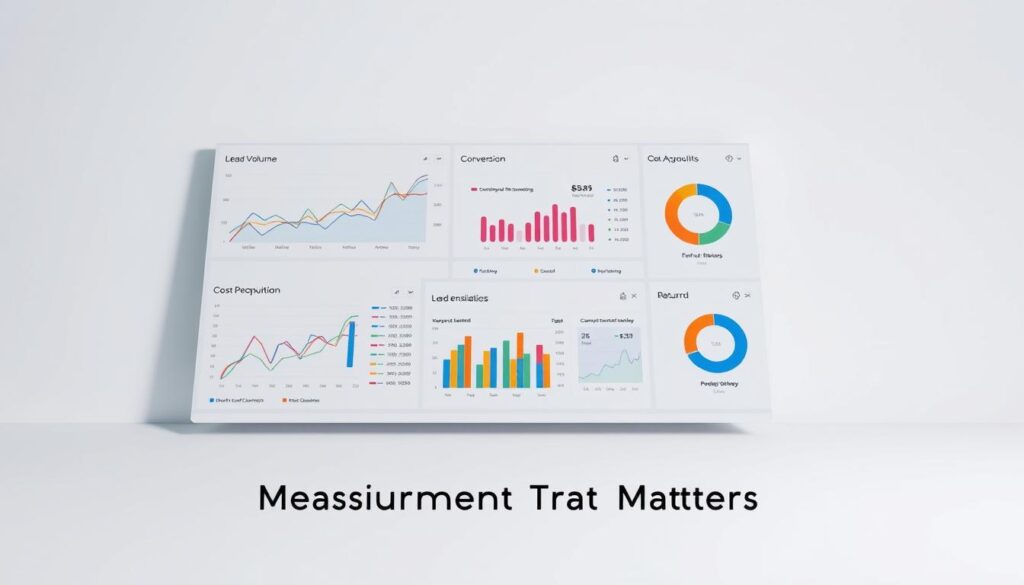
| KPI | What to measure | Why it matters | Suggested cadence |
|---|---|---|---|
| Traffic | Sessions by channel | Shows reach and content fit | Weekly |
| Landing page conversion | Form fills / CTA clicks | Identifies friction on pages | Weekly |
| MQL / SQL rate | Qualified contacts passed to sales | Measures qualification accuracy | Bi-weekly |
| Pipeline & revenue | Opportunities created / closed | Direct business impact | Monthly |
Practical tips:
- Segment by persona to see where the target audience responds best.
- Allocate budget based on multi-touch paths, not just last click.
- Document each test and measure lifts before scaling.
When you tie analytics, attribution, and sales feedback together, you reduce guesswork and improve the process that helps you generate leads and close deals.
Compliance, Transparency, and Trust in Lead Generation
Regulations are tightening, so comparison tools and affiliate models must be transparent and fair.
In February 2024 the CFPB warned that steering consumers via hidden kickbacks on comparison-shopping tools can violate federal consumer protection laws.
“The agency highlighted manipulation of comparison tools and floated a federal comparison shopping site as an alternative.”
Implications: any model that earns referral fees or ranks products must show clear criteria and avoid undisclosed incentives. This reduces legal risk and builds trust with customers.

Practical steps to protect your brand
- Publish transparent disclosures and unbiased rankings so visitors see how listings are ordered.
- Limit data collected; keep only the information needed and secure contact records.
- Use permission-based outreach on social media and email with easy opt-outs and frequency controls.
- Document criteria for comparison tools and audit affiliate relationships regularly.
| Risk | Recommended action | Benefit |
|---|---|---|
| Hidden incentives | Disclose fees and ranking rules | Stronger trust and lower legal exposure |
| Excess data collection | Minimize fields; encrypt stored information | Lower privacy risk and higher form completion |
| Aggressive outreach | Permission-based cadence and clear opt-out | Better long-term engagement and fewer complaints |
Bottom line: transparent, ethical practices turn short-term interest into lasting customers. Opaque tactics may produce quick leads but will erode brand equity over time.
Conclusion
A clear playbook—attract, capture, nurture, qualify, and convert—turns sporadic interest into steady results.
Create useful content, earn attention, exchange real value for contact information, and follow up with timely email and offers.
Agree on simple definitions and document the funnel so marketing and sales move prospects smoothly and forecasting improves.
Test headlines, landing pages, and offers, measure what changes, and repeat what works. Small experiments drive steady improvement.
Trust matters: transparent practices, helpful materials, and respectful outreach keep customers longer and protect your brand.
Start today: pick one small improvement in attract, capture, nurture, qualify, and convert—then measure the lift and scale it.
FAQ
What is the modern definition of lead generation and how does it help my business?
What’s the difference between a lead and a prospect?
Why does this process matter in today’s market?
What are Marketing Qualified (MQL), Sales Qualified (SQL), and Product Qualified (PQL) categories?
How do I move website visitors through the lifecycle to become customers?
What are TOFU, MOFU, and BOFU and why should I care?
How do buyer personas improve messaging?
Should I focus on inbound or outbound methods?
Which channels consistently perform for finding potential customers?
What makes a compelling offer to exchange contact information?
How do landing pages and CTAs improve conversion rates?
What’s an effective nurturing strategy after capture?
How do you qualify contacts and assign scores?
How is B2B different from B2C in this process?
Which metrics should I track to know if my program works?
What compliance and ethical practices should I follow?


