

Finding the right savings account in March 2026 can change how fast your cash grows. The national average for a traditional savings account sits at 0.39% as of March 11, 2026. That makes higher-return, fee-free options worth a close look.
Digital banks and credit unions now compete with competitive rates and lower balance requirements. Openbank, a Santander digital arm, offers FDIC-insured products that skip monthly maintenance charges. Bankrate tracks APYs across institutions to help compare account offers and account rates.
We will explain annual percentage yield, interest rates, minimum balance rules, and how the Federal Reserve shifts savings rates. By the end, you should feel ready to open account options that protect your emergency fund and maximize interest earned.
Key Takeaways
- National average for savings is 0.39% (March 11, 2026).
- Fee-free digital options like Openbank can boost returns.
- Compare APYs and balance requirements before you open an account.
- Understanding annual percentage yield helps protect interest earned.
- Use Bankrate and lender disclosures to evaluate account offers.
Understanding High Yield Savings Accounts with No Fees
Many online banks now offer interest that far exceeds traditional storefront rates. These products work like a standard savings account but pay considerably better interest. They are useful for building an emergency fund or parking cash while you plan next steps.

What is a high-yield savings account
A high-yield savings account is a deposit product that offers an interest rate well above the national average for traditional savings. It remains FDIC-insured up to $250,000 per depositor at an insured institution.
How these accounts work
Interest on these accounts is variable and may change based on bank policy and the Federal Reserve. The quoted annual percentage yield (APY) reflects compound interest over a year.
- Most funds compound daily or monthly to accelerate growth.
- Look for low or waived monthly fees and reasonable minimum balance rules.
- Online banks and credit unions often offer the best returns and easy ways to open account options fast.
Why You Should Prioritize Fee-Free Banking
Small monthly charges can quietly shave years off your savings growth if you don’t watch them.
Even modest monthly maintenance fees reduce the effective return on a high-yield savings account. Over time, these charges can outpace the extra interest you hoped to earn above the national average.
Look for banks that avoid maintenance fees entirely. Vio Bank, for example, pays APY on your whole balance and charges no monthly fees. Peak Bank also offers competitive rates without charging monthly maintenance.

“A truly fee-free experience helps your emergency fund grow at the advertised annual percentage yield.”
Check the fine print before you open account access. Bread Savings may charge $5 for paper statements, and Popular Direct applies a $25 closure fee if you leave within 180 days. Those details matter.
- Compare account offers for inactivity fees and withdrawal penalties.
- Prefer digital statements to avoid small per-request charges.
- Confirm balance requirements so you avoid unexpected maintenance fees later.
| Bank | Common Fee | Note |
|---|---|---|
| Vio Bank | None (monthly) | APY paid on entire balance |
| Bread Savings | $5 per paper statement | Choose digital to avoid charge |
| Popular Direct | $25 early closure | Applies if closed within 180 days |
| Peak Bank | None (monthly) | Online division; competitive rates |
How Annual Percentage Yield Impacts Your Wealth
Compound interest turns steady deposits into meaningful gains over time.
The annual percentage yield (APY) shows the real rate you earn after compounding. A 4% APY on a high-yield savings account turns $15,000 into about $18,250 in five years. That same $15,000 at the national average of 0.39% becomes only $15,295.
Compounding frequency matters. American Express uses daily compounding, which accelerates growth. Capital One 360 Performance Savings compounds monthly, which still works well but yields slightly less over time.

The power of compound interest
Compound interest lets your interest earn interest. Over years, that effect widens the gap between a standard savings account and the best high-yield options.
- Start early: small, regular deposits help compound work harder.
- Check compounding: daily beats monthly when all else is equal.
- Compare APY: a few percentage points change long-term results dramatically.
“Choosing an account with a competitive APY and frequent compounding is one of the simplest ways to boost interest earned on an emergency fund.”
To learn strategies that pair well with strong APYs and steady saving, see our guide on passive income ideas.
Comparing Traditional Savings Versus High Yield Options
When deciding where to park cash, the gap between branch-store rates and online options can be startling.
Traditional savings account rates often sit near the national average of 0.39% as of March 2026. That level may not keep pace with inflation over time.
In contrast, a high-yield savings account at many online banks can pay 3%–4% APY. That difference meaningfully increases interest earned on the same balance.

Choose based on liquidity and goals. For an emergency fund, the best high-yield savings options blend access and a competitive annual percentage yield. For long-term wealth, consider investment accounts instead.
- Branch banks: easy access, often lower account rates and possible monthly maintenance.
- Online banks and credit unions: competitive rates, lower overhead, and simple open account processes.
- Compare savings account rates on sites like Bankrate to evaluate account offers and balance requirements.
“For short-term goals, moving funds to a stronger rate can boost interest without taking market risk.”
Essential Features to Look for in a Savings Account
A slick mobile app and dependable support are often the real perks of modern deposit products.
Mobile app accessibility
Mobile app accessibility
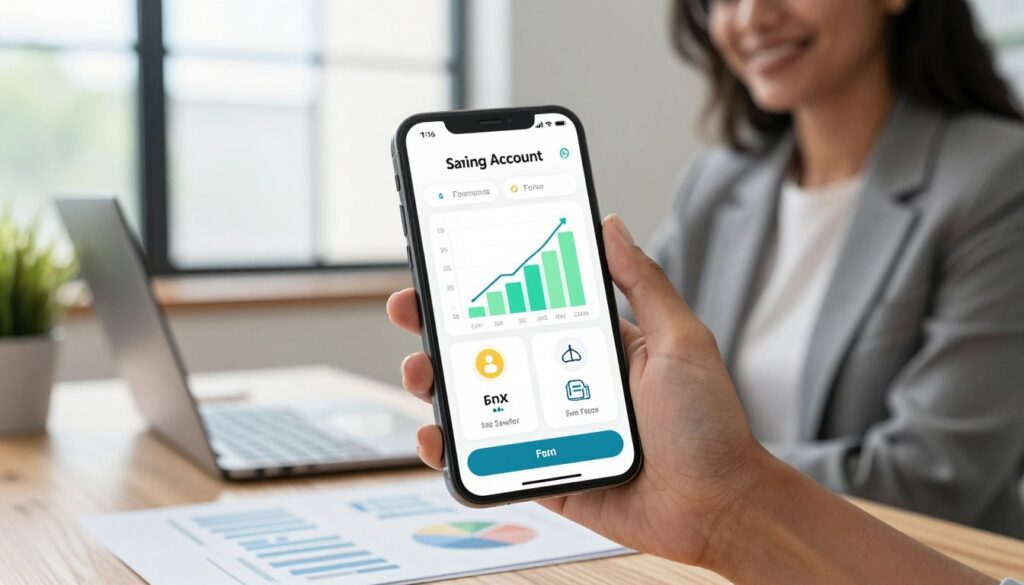
Choose a product whose app makes it simple to check balance and move money. Fast transfers and clear alerts help you protect an emergency fund and earn interest efficiently.
Capital One 360 Performance Savings and Axos Bank offer top-rated apps. Test the app before you open account access to ensure the interface fits your routine.
Customer support quality
Good support matters when something goes wrong. Ally provides 24/7 help by phone, chat, or email. Bask Bank offers extended phone hours, including Saturdays.
EverBank has limited weekend service, so consider hours when you pick a provider. Strong support reduces stress and keeps your funds accessible.
“Reliable service combined with a usable app makes a practical difference for everyday banking.”
| Bank | Mobile App | Support Hours | Note |
|---|---|---|---|
| Ally | Yes | 24/7 | Full phone, chat, email support |
| Capital One 360 | Yes | 24/7 | Account alerts, card lock |
| Axos Bank | Yes | 24/7 | Seamless digital experience |
| Bask Bank | Limited | Saturdays included | Strong phone hours |
| EverBank | Yes | Limited weekends | Performance Savings support |
Tip: Always confirm monthly maintenance fees and balance requirements before you open an account. For saving strategies that pair well with easy access features, see our guide to the best way to save money.
Evaluating Minimum Balance Requirements
Before you open an account, check whether the bank requires a minimum balance to earn its top advertised rate.
Minimum balance requirements determine if you actually get the best annual percentage yield. Some institutions pay their headline APY only on larger balances. A small shortfall can drop your interest to a lower tier and reduce interest earned over time.
Examples matter. CIT Bank’s Platinum Savings needs at least $5,000 to qualify for its top rate. Alliant’s High-Rate Savings requires $100 to earn the advertised yield. EverBank’s Performance Savings often has no minimum balance, which helps beginners.
LendingClub’s LevelUp uses a tiered approach: deposit at least $250 each month to unlock higher returns. Confirm whether a bank uses daily or monthly averages for balance requirements before you open account access.
- Check the fine print: daily vs. average minimums affect eligibility.
- Match the offer to your budget: choose an option that won’t force penalties.
- Mind monthly maintenance: small charges can offset a competitive interest rate.

“Choosing an account that fits your current cash flow prevents missed rates and preserves your earned interest.”
The Role of Federal Reserve Rates on Your Earnings

Changes at the Federal Reserve ripple quickly through bank rate sheets and your monthly interest earnings.
The federal funds rate helps set the tone for what banks pay on deposit products. When the Fed raised rates between 2015 and 2018, many savers enjoyed higher returns. In contrast, the Fed cut rates to near-zero during the COVID-19 pandemic, and returns fell sharply.
Starting in late 2024 the Fed began trimming its target again. That move has pushed a recent downward trend in many high-yield savings accounts and online savings offers.
What this means for you:
- Banks adjust APYs when the Fed changes its target, so your annual percentage yield can shift.
- If rates drop, compare account rates and balance requirements to protect interest earned.
- When rates rise, consider opening a high-yield savings account or switching to the best high-yield alternatives to earn competitive returns.
“Watching Federal Reserve announcements helps you plan and adjust your personal finance strategy.”
| Fed action | Typical bank response | What you can do |
|---|---|---|
| Rate cut | Banks lower APYs | Shop account offers; review minimum balance rules |
| Rate hike | Banks raise interest rates | Open account or move funds to earn competitive rates |
| Stable policy | Account rates hold steady | Keep emergency fund in a trusted savings account and monitor announcements |
Staying informed is practical. For more saving tactics, read our smart saving tips to pair with your choice of bank savings product.
Benefits of Choosing Online Banks and Credit Unions
Choosing a digital bank or a local credit union can boost how much your emergency fund earns each year.
Online banks like Ally and American Express pass lower overhead into better account rates. That can mean more interest earned and fewer monthly maintenance surprises.
Credit unions are member-owned and often return value through community service and personal support. Alliant Credit Union is NCUA-insured and offers a notable example: a popular high-yield savings account and fee-free access to over 80,000 ATMs.

Differences between banks and credit unions
- Online banks: strong digital tools, fast transfers, often the best high-yield savings choices.
- Credit unions: member focus, personalized service, and competitive annual percentage yield in many cases.
- Both: federal insurance, competitive rates, and fewer branch costs than traditional savings providers.
“Pick the institution that matches your tech needs and your budget, then compare account offers and minimum balance rules before you open account access.”
Strategies for Building an Emergency Fund
Treat your emergency fund like a monthly obligation and automate transfers to build it without thinking.
Use a separate high-yield savings account so those dollars stay set aside for true emergencies. Keeping funds in a dedicated savings account reduces the chance you’ll spend them on daily needs.
Aim for three to six months of living expenses. That cushion protects you from job loss, car repairs, or medical bills.

Pick an institution that pays a competitive annual percentage yield and has easy transfer tools. Avoid rigid minimum balance requirements that could block access when you need cash.
Tools help: Ally’s buckets let you label and track goals inside one product. Automated transfers and clear labels make steady progress easy and measurable.
- Keep the emergency fund separate from your checking.
- Automate recurring deposits to ensure consistent growth.
- Confirm quick transfers back to checking in case you must withdraw.
“A well-funded emergency fund in a reliable savings account buys peace of mind and protects long-term plans.”
How to Open Your New Savings Account
A quick, prepared application helps you move funds into a competitive savings vehicle and start earning interest right away.

Before you apply, gather your driver’s license, Social Security number, and a recent utility bill for proof of address. Many banks verify identity electronically, which speeds the process.
Timing: Some providers finish online sign-up in under ten minutes. Bread Savings typically completes sign-up very fast. American Express lets you fund an account from an external bank in a few days.
- Compare savings account offers and confirm the advertised annual percentage yield and any balance requirements.
- Check if an initial deposit is required to open account access and avoid surprise monthly maintenance or early closure charges.
- Set up automatic transfers after funding to build your emergency fund and track interest earned through the bank’s app.
“Once your account is active, interest begins accruing on your deposited balance.”
| Step | What to Have Ready | Why It Matters |
|---|---|---|
| Identity verification | Driver’s license, SSN, utility bill | Speeds approval and prevents delays |
| Funding | External bank link or initial deposit | Activates the account so you can earn interest |
| Offer review | Compare APY, balance rules, maintenance fees | Ensures you choose the best high-yield option for goals |
Managing Your Money with Digital Banking Tools
Smart mobile tools let you move funds, set goals, and watch interest grow in real time.

Round-up programs — like Ally Bank’s — automatically shift spare change into your high-yield savings account. Small transfers add up and keep your saving habit on autopilot.
UFB Direct and other providers offer highly rated mobile apps. They show balances, transaction history, and let you transfer money in seconds. Mobile check deposit makes funding an account simple and fast.
Account alerts notify you when interest posts, balances fall below the minimum balance, or a transfer completes. Alerts help you avoid maintenance fees and keep the annual percentage yield working for you.
“Use digital tools to make saving automatic — the convenience preserves momentum and boosts long-term interest earned.”
- Set up round-ups and recurring transfers to build an emergency fund.
- Enable alerts to track interest earned and account rates.
- Confirm the app supports quick transfers before you open account access.
For more tips on comparing account offers and finding the best high-yield options, check our savings hub.
Understanding the Risks and Protections of Your Deposits
Before you open an account, confirm how much of your balance is federally protected.

Most bank deposits are insured up to $250,000 per depositor by FDIC for banks or NCUA for credit unions. That protection covers principal and interest if an institution fails.
Some providers extend coverage. Axos Bank’s Insured Deposit Program can increase FDIC protection to about $2.5 million by placing funds across multiple banks. Neobanks often partner with FDIC-insured banks, so always verify the partner institution.
- Verify insurance before you open account access.
- Spread balances across institutions to exceed $250,000 safely.
- Confirm how partner banks handle deposits at neobanks.
These deposit products are low risk compared with the stock market. Still, check balance requirements, maintenance fees, and how interest posts to protect your emergency fund and interest earned.
| Institution Type | Default Protection | Notes |
|---|---|---|
| Traditional bank | FDIC $250,000 | Check per-depositor rules |
| Credit union | NCUA $250,000 | Member share insurance |
| Program (Axos) | Up to $2.5M | Brokered FDIC coverage across banks |
| Neobank partner | Varies by partner | Verify underlying FDIC bank |
“Federal insurance turns prudent saving into reliable protection.”
Alternatives to High Yield Savings Accounts
If you need check-writing or card access, consider products that blend liquidity and convenience.
Money market accounts (MMAs) often offer debit cards and check-writing, making them useful for bills and short-term cash. CIT Bank, for example, lists an MMA option that pays up to an 1.55% APY while keeping everyday access.
MMAs can match or beat traditional savings account rates and still let you tap funds quickly. Check balance requirements and monthly maintenance before you open account access.

Certificates of deposit (CDs)
CDs lock money for a fixed term in exchange for a set interest rate. Bread Savings offers CDs that are a solid choice if you do not need immediate access.
CDs often pay a steadier percentage yield than short-term online savings options. Remember: early withdrawal can trigger penalties that reduce interest earned.
- MMAs: flexible access, check-writing, debit cards; ideal for frequent use.
- CDs: fixed rate, best for money you can leave untouched for the term.
- Investments: stocks or bonds may earn more long term but carry higher risk than deposit products.
“Compare the annual percentage yield and the account rates before you move funds; the right tool depends on your timeline and comfort with liquidity trade-offs.”
For practical saving steps that pair well with these options, see our guide on tips for saving money.
Tax Implications of Interest Earned
Tax rules treat bank interest as ordinary income, so plan for the impact on your yearly tax bill.
Any interest you earn in a high-yield savings account must be reported to the IRS. Banks issue Form 1099-INT when interest exceeds $10, but you remain responsible for reporting all interest even if you don’t receive this form.
Taxes reduce your net return and change the effective annual percentage yield you actually keep. Factor federal and state tax into personal finance plans before you open account access.
Keeping clear records of interest earned across savings accounts and traditional savings products makes tax time easier. Track interest in one place and save statements from banks or credit unions.

- Interest is taxable and should be reported on your annual tax return.
- Expect Form 1099-INT if you earn more than $10 in a calendar year.
- Taxes can lower the effective percentage yield on online savings and bank savings products.
“Remember that the interest rate you see is gross; your take-home will be lower after taxes.”
Common Pitfalls to Avoid When Selecting a Bank
Hidden charges and poor service hours are common traps that erode your earned interest.

Failing to check monthly maintenance fees is a top mistake. Small monthly charges can offset the advertised annual percentage and reduce interest earned over time.
Watch early-closure rules. For example, Popular Direct charges a $25 fee if you close an account within 180 days. That surprises many new savers.
Don’t pick a bank based only on a promotional rate. Confirm the long-term percentage yield and compare savings account offers from multiple banks credit unions before you open account access.
Verify FDIC or NCUA insurance. Never open account access at an institution that lacks federal protection.
- Check minimum balance requirements so you can maintain the rate you expect.
- Confirm customer service hours; limited support can be a real problem in an emergency.
- Test the mobile app to ensure managing your emergency fund is simple and fast.
“Take your time to research each bank; the right option can make a massive difference in long-term interest earned.”
| Common Pitfall | Why It Matters | Quick Fix |
|---|---|---|
| Monthly maintenance | Reduces net interest | Choose fee-free or waive options |
| Early closure fee | Unexpected cost for movers | Read the fine print |
| Uninsured provider | Risk to deposits | Confirm FDIC/NCUA |
Conclusion
Small choices—like platform tools and balance rules—add up to big differences in long-term growth. Choose a plan that matches your cash needs and schedule regular deposits to keep progress steady.
Prioritize fee-free banking and competitive APY so your money works harder. Read product details carefully before you open an account.
Compare features across banks credit unions to find the best fit for customer service, mobile tools, and balance requirements.
As you review top accounts march 2026, bookmark offers and check rates often. Monitor your savings accounts march performance so you can move funds if better options appear.
FAQ
What is a high-yield savings account?
How do these accounts work?
Why should I prioritize fee-free banking?
How does annual percentage yield (APY) affect my savings?
What is the power of compound interest?
How do traditional savings compare to higher-rate options?
What essential features should I look for in a savings account?
How important is mobile app accessibility?
How do I evaluate customer support quality?
What should I know about minimum balance requirements?
How do Federal Reserve rate changes affect my earnings?
What are the benefits of choosing online banks or credit unions?
How do banks and credit unions differ?
What strategies help build an emergency fund?
How do I open a new savings account?
What digital tools help manage my money?
What protections exist for my deposits?
What are alternatives to these accounts?
How do money market accounts differ from CDs?
What are the tax implications of interest earned?
What common pitfalls should I avoid when selecting a bank?


