

This article offers a clear definition of what it means to be an independent contractor and how that role differs from regular employment. You’ll get plain-language insight into flexibility, control, and project-based work so you can decide if this path fits your goals.
In the United States, many people and small businesses choose freelance work to set their own schedule and pick clients. The IRS treats payments over $600 differently, typically via Form 1099-NEC, and you usually handle taxes and recordkeeping yourself. That independence lets you steer your business but also means more admin and planning.
This article will compare a contractor vs employee across control, pay, taxes, benefits, and liability. You’ll learn practical tests used by the IRS and common contract terms that signal contractor status. If you want a hands-on guide to building a freelance name or running a side business, see our practical tips at side hustle ideas.
Key Takeaways
- Definition matters: Correct classification affects taxes, benefits, and penalties.
- Contracting offers more control over work, schedule, and clients.
- Contractors handle their own taxes, records, and insurance needs.
- Companies report payments over $600 on Form 1099-NEC for nonemployees.
- We’ll use U.S. guidelines and real examples to help you decide.
Independent contractor vs employee: what’s the real difference?
Whether you answer to a boss or to a client changes more than your calendar. The split affects taxes, the right to benefits, and who controls daily work.

Control, pay structure, and benefits at a glance
Control: Employees usually follow employer instructions and join ongoing teams. By contrast, a self-employed service provider sets methods and hours within the agreed scope.
Pay and compensation: Employees get wages or salaries, with taxes withheld and W-2 reporting. Contractors invoice for projects or hours, receive Form 1099-NEC, and handle self-employment tax.
Benefits and protections: Employees can be eligible for overtime, unemployment, and employer-provided benefits. Contractors must secure their own health and retirement coverage and do not get unemployment.
Why classification matters for your income and protections
Misclassification can trigger back taxes, penalties, and lost protections for workers and firms. On a practical level, it changes take-home pay, cash flow, and who covers payroll taxes like FICA.
| Feature | Employees | Contractors | Immediate impact |
|---|---|---|---|
| Control | Supervised; employer sets hours | Sets methods and hours within scope | Determines daily routine and oversight |
| Pay reporting | W-2; taxes withheld | Invoices; 1099-NEC; no withholding | Impacts cash flow and tax timing |
| Benefits | Overtime, unemployment, possible health plans | No employer benefits; must provide own | Changes total compensation package |
- Onboarding: Employees complete payroll and benefits forms; contractors submit a W-9 and agree on scope and rate.
- Assess your day-to-day: control, supervision, hours, and benefits show which status fits actual work.
Independent contractor definition and status tests
Determining work status focuses on three practical areas: how tasks are directed, who bears financial risk, and how the parties relate over time.

IRS “right to control” framework
The internal revenue service evaluates behavioral control, financial control, and the relationship. Behavioral control asks who trains and sets methods. Financial control looks at who pays expenses and invests in tools. Relationship factors include contracts, benefits, and how permanent the role is.
Economic realities under the Fair Labor Standards Act
The labor standards act focuses on whether a worker is economically dependent on the hiring entity. Labels in an agreement are not the deciding factor. Agencies examine day-to-day facts to see if a person functions like an employee.
Common law and court factors
Courts weigh integration, permanence, investment, control, and the opportunity for profit or loss. Significant business investment and multiple clients point toward a contractor finding, while deep integration and lasting roles favor employee status.
“Look at who actually controls the work, not just the words on a contract.”
Tip: Compare your situation to these tests before signing or renewing agreements. For a real-life perspective, read this side-hustle success.
| Test | Key question | Signals of employee | Signals of contractor |
|---|---|---|---|
| Behavioral | Who directs how tasks are done? | Company trains and supervises | Worker sets methods |
| Financial | Who bears expenses and invests? | Employer supplies tools; no business risk | Worker invests; bears profit/loss |
| Relationship | How permanent or integrated is the role? | Long-term, integrated into business | Short-term, serves multiple clients |
How pay, taxes, and forms differ between employees and independent contractors
How you are paid affects cash flow, recordkeeping, and your tax obligations. Employees get wages with withholding and a W-2. Those working as a self-employed service provider submit a W-9 and, when paid $600 or more, receive Form 1099-NEC from clients.
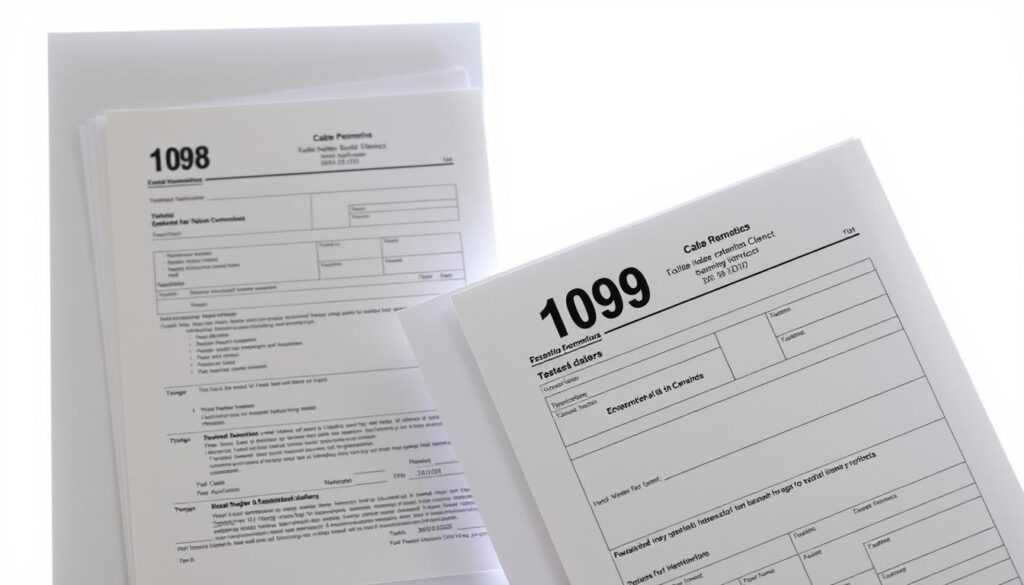
Forms W-9 and 1099-NEC vs W-2: reporting income and payments
Key paperwork: Employers run payroll and issue a W-2. Clients request a W-9 at onboarding and issue 1099-NEC by January for eligible payments.
Social Security and Medicare: self-employment tax vs FICA withholding
In 2024, self-employment tax includes 12.4% Social Security on the first $168,600 of net income and 2.9% Medicare on all net income. High earners may pay an extra 0.9% Medicare tax. Employees see FICA withheld and the employer pays a share.
Quarterly estimated taxes, deductions, and business expense write-offs
Self-employed people file Schedule C with Form 1040 and make quarterly estimated payments using Form 1040-ES to the Internal Revenue Service. Ordinary business expenses—equipment, supplies, home office, insurance—reduce taxable income before tax calculations.
| Item | Employees | Self-employed |
|---|---|---|
| Forms | W-4 onboard; W-2 year-end | W-9 at start; 1099-NEC if $600+ |
| Tax treatment | Withholding each paycheck; employer pays FICA share | Pay gross; owe self-employment tax and quarterly estimates |
| Deductions | Limited for unreimbursed work costs | Can deduct ordinary and necessary business expenses on Schedule C |
| Recordkeeping | Employer maintains most payroll records | Track invoices, receipts, mileage, and payments |
Plan ahead: align invoices with reported 1099-NEC amounts to avoid IRS mismatches and consider retirement and health premium strategies. For practical side-hustle tax tips, see our side hustle guide.
Benefits, protections, and liability: who gets what—and who bears the risk
Work classification affects more than paychecks — it determines who gets legal protections and who carries risk.

Overtime, unemployment, and workers’ compensation eligibility
Employees qualify for overtime after 40 hours per week in many cases, may collect unemployment, and often receive workers’ compensation for workplace injuries.
By contrast, a contractor usually must self-insure or buy private coverage and does not get state unemployment payments.
Vicarious liability, misclassification risks, and employer obligations
Companies generally are not vicariously liable for a contractor’s negligence, but exceptions exist for ultrahazardous tasks, invitee injuries on property, or when the worker is held out as an employee.
Misclassification can force an employer to pay back FICA, unemployment taxes, and penalties. That creates exposure for both the firm and the workers denied protections.
| Issue | Employees | Contractors |
|---|---|---|
| Overtime | Eligible after 40 hours (FLSA rules) | Not generally eligible |
| Unemployment | Employer contributes; worker may claim benefits | No state unemployment coverage |
| Liability | Employer may be vicariously liable in many cases | Hiring party usually not liable; exceptions apply |
Practical tip: document roles, buy proper insurance, and audit classifications regularly to reduce disputes and protect compensation packages.
For ideas on low-cost ways to cover benefits through side work, see zero-upfront side hustles.
Independent contractor work in practice: roles, agreements, and control
D. From design to trucking, people deliver services under short-term agreements and own their work methods.

Where this model fits: Accountants, architects, IT professionals, lawyers, photographers, musicians, general builders, translators, real estate agents, and truck operators often thrive as service providers.
Typical occupations and industries
These professions usually supply their own tools and set schedules. They sell to multiple clients and run a small business around their trade.
Scope of work, right to control, and key contract terms
A clear contract should state deliverables, milestones, deadlines, and payment terms without prescribing daily methods. That helps preserve status and keeps the company from exercising employer-like control.
Practical negotiation tips: Define outcomes, acceptance criteria, change-order steps, IP ownership, confidentiality, and invoicing dates. Set rates to cover expenses, taxes, insurance, and a margin.
| Signal | Means | Effect on status |
|---|---|---|
| Own tools | Supplies equipment and software | Shows business independence |
| Multiple clients | Works for several firms or the public | Supports contractor status |
| Sets hours | Chooses work times and location | Reduces employer control argument |
Tip: Maintain a public business presence, carry insurance, and keep clear records. For practical marketing help, see our affiliate marketing guide.
Independent contractor: is this path right for your goals?
Working for yourself can boost earnings but also brings variable pay and extra admin.

Independence, income potential, and tolerance for risk
Independence lets you choose clients, set schedules, and pivot niches fast. That flexibility supports growth and a personal brand.
Income can rise as you increase rates or take more projects. But expect uneven cash flow, project gaps, and the possibility of loss that reduces take-home pay.
Tax planning matters. You pay both employee and employer portions of Social Security and Medicare via self-employment tax and often make quarterly estimates.
- Price work to cover benefits and overhead; compare that total to an employee salary plus employer-paid perks.
- Use deductions and retirement plans (SEP IRA, SIMPLE IRA, solo 401(k)) to lower taxable income.
- Build emergency savings and buy insurance since unemployment and workers’ comp are usually not available.
Try a part-time pilot or a single client to test rates, admin load, and whether this status fits your appetite for control and paperwork. For a practical starter course, see your free course.
Conclusion
Picking a work model changes more than your schedule; it changes how the law and the internal revenue service see you.
Independent contractors typically set methods and carry business risk, while employees belong to a company’s operations and get employer oversight and statutory protections.
Use the IRS “right to control” factors and the Fair Labor Standards Act economic realities test to check your status in real situations. These tests matter more than titles.
Financially, contractors invoice and handle self-employment taxes and social security contributions; employees receive W-2 pay, payroll withholding, and employer-paid FICA and benefits.
Document service scope, hours, and payment terms, and review contracts before new engagements. You may also explore hybrid arrangements only when they meet legal tests.
Next step: review your agreements, align daily practices with the intended status, and consult a qualified pro if needed. For practical marketing examples, see affiliate marketing examples.
FAQ
What is the difference between a contractor and an employee?
How does the IRS decide worker status?
What is the economic realities test under the Fair Labor Standards Act?
Which tax forms should I expect: W-9/1099-NEC or W-2?
How do Social Security and Medicare taxes differ?
Do I need to pay quarterly estimated taxes?
What deductions and write-offs are available for people running their own business?
Am I eligible for overtime, unemployment, or workers’ comp?
What are the risks of misclassification for companies and workers?
How does contract wording affect status?
What occupations commonly use contract arrangements?
When should I form a business entity like an LLC?
How can I protect myself from liability while offering services?
Where can I get reliable guidance on worker status and taxes?


