

This short guide lays out clear, practical steps to protect quality while helping you save thousands during construction and for years after you move into your new home.
Cheap is not the goal—smart choices are. Focus on early decisions like budgeting, floor plan, and materials strategy. These moves avoid costly fixes later and cut overall costs without harming long-term value.
Two themes will steer every decision: simplify what is hard to change later (layout, structure, systems) and delay what is easy to upgrade later (fixtures, lighting, some finishes). Use the simple mental model: permanent parts vs. swap-later parts.
This guide targets U.S. homeowners building a custom home. Pricing and labor vary by region, so test each tactic locally and keep a realistic contingency. Start clear with your contractor and communication from day one to stay on plan.
Key Takeaways
- Prioritize early choices—layout, systems, and insulation—for the biggest wins.
- Delay cosmetic upgrades that are easy to swap later to protect upfront budget.
- Use the permanent vs. swap-later mental model to guide spending.
- Evaluate strategies locally; regional costs and labor matter.
- Keep a plan, a contingency, and clear contractor communication from day one.
For more guidance and planning tools, visit home planning resources.
Start With a Realistic Home Building Budget and Cost Priorities
Start your build with a realistic budget that maps where every dollar will go. Break the total into four clear buckets: design and planning, materials, labor, and other expenses. This view makes tradeoffs visible and keeps surprises small.
The plan stage matters most. Design and planning often run near 10% of the budget, yet they shape labor, waste, and change orders later. Labor rates vary by region; typical ranges can be $35–$100 per hour, so DIY choices change the math.

- Set a contingency line up front to handle site issues or scope changes.
- Decide early which areas to keep basic (fixtures, some flooring) and which to protect for quality (insulation, windows, systems).
- Compare contractor bids apples-to-apples; ask what’s excluded so the lowest quoted cost doesn’t become the most expensive.
Try a quick priority exercise: list five must-haves (function) and five nice-to-haves (finishes) to guide quotes and choices. Spending a bit more on permanent items often yields real long-run savings in repairs and utility bills.
For extra resources and ways to find flexible funding, see extra cash options to support your plan and timeline.
Choose a Floor Plan That Cuts Construction Costs Without Feeling “Smaller”
A smart floor plan makes your home feel larger while cutting construction complexity. Simple shapes and thoughtful layout choices lower bids and speed up work on site.
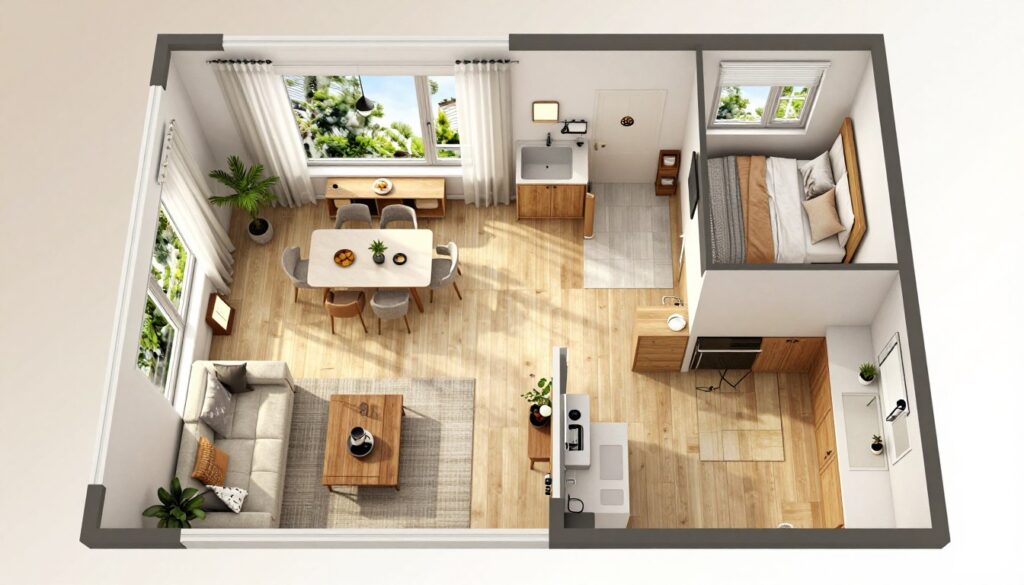
Keep the layout simple with a practical square or rectangle footprint
Square or rectangular footprints reduce framing complexity and roof intersections. That trims material waste and fewer tricky connections mean lower labor hours.
Build up instead of out with a two-story design
Going two-story shrinks the foundation and roof area for the same usable space. Less foundation and smaller roof planes often cut overall construction cost while preserving square footage.
Prioritize function over extra square footage
Fewer halls, combined mudroom/laundry, and storage under stairs make the home more useful without adding square footage. Open flow between kitchen, dining, and living reduces interior walls and feels larger.
“An efficient plan wins back comfort without inflating the budget.”
| Cost Driver | Simple Design | Complex Shape | Practical Gain |
|---|---|---|---|
| Framing & Roof | Lower | Higher | Fewer intersections = less waste |
| Foundation | Smaller area | Expanded perimeter | Two-story saves on slab/footing |
| Labor Time | Shorter schedule | Longer schedule | Smoother bids and fewer delays |
Practical note: For extra planning resources and ideas for long-term returns, see our passive income resources to support design choices that fit your daily life.
Money saving tips when building a house through smarter material choices
Picking the right products early avoids costly custom orders and hold-ups. Good choices on materials lower both purchase costs and onsite delays.
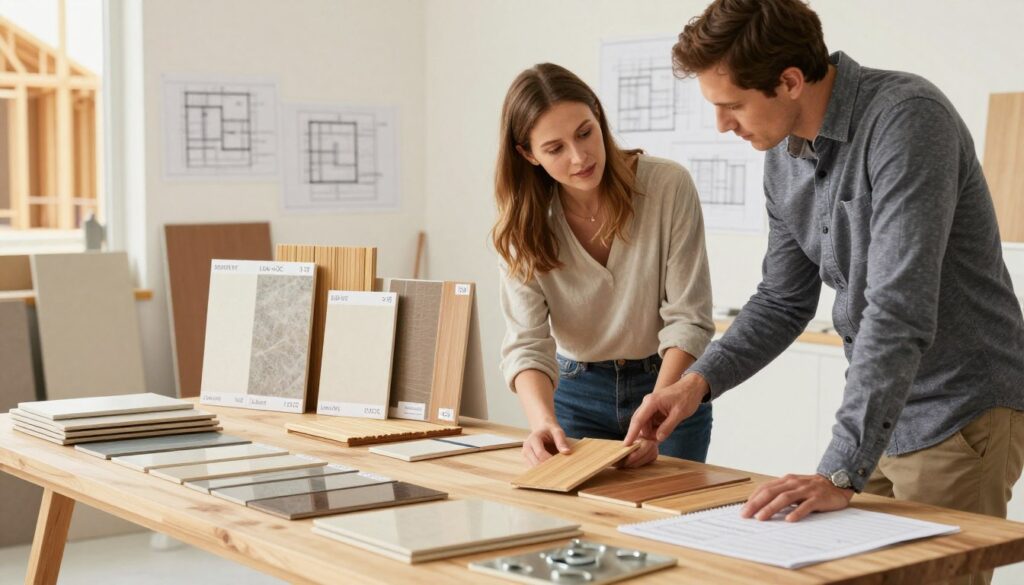
Buy standard sizes to avoid custom pricing
Standard-sized windows, doors, cabinets, and framing spans cut costs fast. Custom dimensions trigger higher prices and longer lead times. Stick to common sizes whenever the design allows.
Purchase bulk or buy direct from suppliers
Ask suppliers about pallet pricing, contractor-grade lines, or trade discounts. Buying direct reduces contractor markups and can lower overall material costs for big projects.
Use reclaimed or recycled options where they fit
Reclaimed wood, vintage doors, surplus brick, and lightly used fixtures add character and can reduce spend. Be careful: some reclaimed finds need extra labor to fit.
- Checklist: vintage doors, reclaimed brick, surplus flooring, gently used fixtures.
- Sources: Habitat for Humanity ReStores, Craigslist, Facebook Marketplace for local overstock and tear-outs.
Time purchases and document every decision
Buy big-ticket items during off-season sales or end-of-line clearances to cut costs. For long lead items, order early to avoid labor standstills.
Track model numbers, finish codes, and delivery windows. Clear records prevent re-orders and change fees that inflate project costs.
“Balance budget, durability, and style—true value lasts longer than a low upfront price.”
| Material Option | Typical Cost Impact | Lead Time | Best Use |
|---|---|---|---|
| Standard-sized windows | Lower | Short | Main living areas |
| Bulk lumber (direct) | Lower | Variable | Framing, decking |
| Reclaimed brick | Moderate | Short | Feature walls, paths |
| Surplus fixtures | Lower | Short | Baths and utility rooms |
Control Labor Costs Without Risking the Quality of the Build
Labor drives most of your budget; small delays can turn a fair quote into a big bill. Keep the focus on clear roles, steady schedules, and proven crews to protect your timeline and quality.

Hire the right lead
Choose an experienced builder with recent references. Ask how the contractor handles allowances, change orders, and timeline management. A builder who coordinates trades well avoids rework and failed inspections.
DIY smart, not risky
Take on low-risk tasks to save money: interior painting, simple installs, basic flooring, hardware swaps, and post-move landscaping. These tasks cut costs without creating code or warranty problems.
Hands-off for high-risk systems
Never DIY electrical, plumbing, or HVAC. Mistakes here can cause fires, leaks, void warranties, and force costly fixes that far exceed any short-term savings.
- Weekly site check-ins
- Written selection deadlines
- Quick decisions to keep crews working
“Good coordination keeps projects moving and protects the build.”
| Area | Who | Why it matters |
|---|---|---|
| Rough-ins | Licensed pros | Safety, inspections, warranties |
| Finishes | Owner DIY or contractor | Lower cost, flexible timing |
| Scheduling | Builder | Reduces idle crew hours and rework |
Bottom line: use a hybrid approach. Let licensed pros handle technical work, then do finish tasks when the home is weather-tight. That balance protects quality while offering real ways to save.
Save on Finishes and Fixtures You Can Upgrade Later
Smart short-term choices on fixtures and finishes keep the home feeling complete now and flexible later. Prioritize systems and structure, then pick non-structural items you can swap without major work.
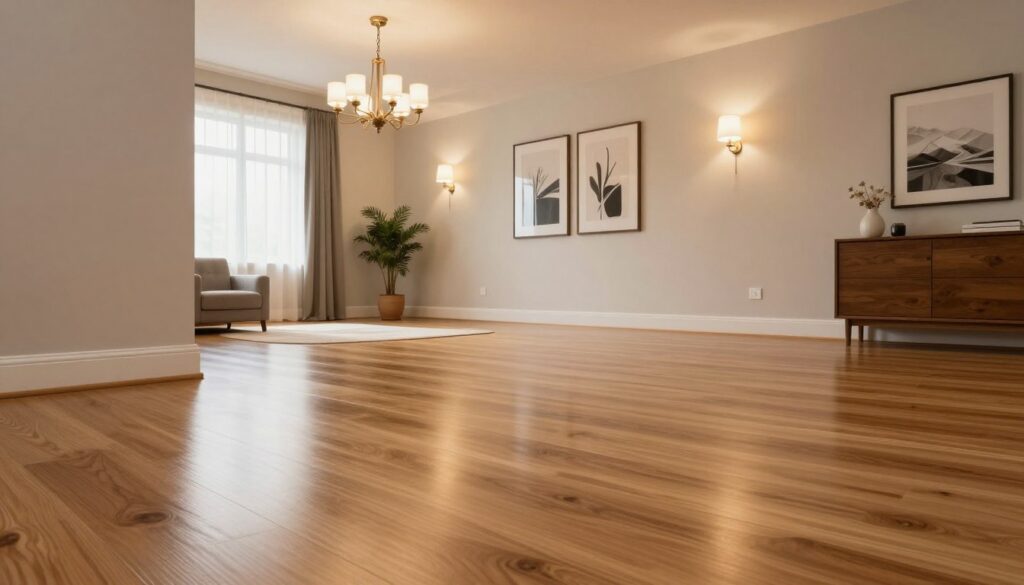
Flooring strategies by room
Spend more where traffic is highest: entry, kitchen, and main living. Choose durable floor options there. In bedrooms, use comfortable, budget-friendly choices like carpet or low-cost luxury vinyl plank that you can replace later.
Timeless cabinets, better hardware
Pick simple fronts such as Shaker-style cabinets in standard finishes. Spend modestly on quality hinges and handles to lift the look without full custom costs.
Lighting choices that evolve
Install basic lighting fixtures in secondary rooms and reserve a small splurge for anchors like the dining area or entry. Upgrading lighting fixtures later is a fast visual win.
Paint, trim, and carpentry that read high-end
Use consistent trim profiles, clean caulk lines, and durable washable paint in high-traffic zones. These small choices deliver a custom feel without custom labor. Appliances often fall into the swap-later category too—buy serviceable models now and upgrade over time.
“Position finishes as the safest place to defer upgrades—swap them after move-in for big visual gains.”
| Area | Initial Option | Upgrade Later | Why |
|---|---|---|---|
| Entry | Luxury vinyl plank | Tile or hardwood | Durability and curb appeal |
| Kitchen | Value countertop, standard cabinets | Quartz, upgraded cabinetry | Function now; style later |
| Bedrooms | Carpet or vinyl | Engineered wood | Comfort vs. long-term finish |
| Lighting | Basic fixtures | Feature pendants and sconces | Instant style impact |
For creative ways to phase purchases and plan upgrades, see our guide on staged upgrades.
Spend Strategically on the “Permanent” Parts of the House
Invest in the parts you won’t want to tear out later: the building envelope sets comfort and costs for decades.

Why prioritize permanent components? Replacing insulation or windows later is disruptive and expensive. You can swap a light fixture easily, but fixing the envelope requires demo, rework, and often new finishes.
Insulation and real-life benefits
Good insulation reduces drafts, keeps temperatures steady, and cuts HVAC runtime. Rooms feel quieter and more comfortable, and lower system hours reduce energy bills over time.
Windows and doors: product plus installation
Choose energy-efficient windows and well-sealed doors. Proper flashing, quality sealing, and precise installation matter as much as the product for performance.
High-performance wall options
Consider ICF walls (e.g., Fox Blocks). Studies show up to 44% lower heating and 32% lower cooling costs versus wood framing. That improves comfort and durability right away.
“Think lifecycle costs—monthly bills plus maintenance—rather than the cheapest upfront bid.”
| Component | Benefit | Impact |
|---|---|---|
| Insulation | Fewer drafts, quieter rooms | Lower energy use |
| Windows / window frames | Reduced heat transfer | Improved comfort, energy savings |
| ICF walls | Higher R-value, durable | Up to 44% heating & 32% cooling savings |
| Right-sized HVAC | Lower upfront costs | Better comfort, reduced run time |
Pick Appliances and Systems That Lower Monthly Bills
Small choices in appliances and controls can lower monthly energy use in measurable ways. Focus on products and wiring that cut operating costs, not just purchase price.

Mid-range appliances for practical value
Choose mid-range appliances for core features, easier repairs, and sensible pricing. You can upgrade one item at a time instead of overspending up front.
Look for ENERGY STAR and compare operating costs
Check ENERGY STAR ratings and estimated annual operating costs for refrigerators, dishwashers, and laundry. A lower run cost often beats a slightly cheaper sticker price.
Smart controls and LED planning
Programmable or smart thermostats reduce wasted heating and cooling by matching schedules to occupancy. They work quietly in the background and lower bills.
Specify LED fixtures for kitchens, baths, and exterior lighting now. LEDs cut wattage and last longer, which reduces replacement frequency and energy use.
Plan for future solar and easy upgrades
Run conduit, reserve roof capacity, and note inverter locations during construction. Future solar or smart-system installs are far cheaper with this pre-planning.
“Pick proven options that improve comfort, simplify upgrades, and reduce monthly bills.”
| Choice | Benefit | Why it works |
|---|---|---|
| Mid-range appliances | Reliability, repairability | Standard parts, lower lifetime cost |
| ENERGY STAR models | Lower operating cost | Verified efficiency, rebates available |
| Smart thermostat | Reduced run time | Schedules and remote control cut waste |
| LED fixtures | Lower electricity use | Long life, high efficiency in high-use areas |
Know When to Splurge for Resale Value and Daily Comfort
Not all splurges are equal—some upgrades repay themselves through use and resale. Choose a small set of smart splurges that boost daily life without blowing the budget. Balance personal comfort with broad market appeal to protect long-term value.

Kitchen upgrades that matter
Invest in layout, workflow, durable surfaces, and good lighting. A practical island, ample outlets, and quality counters improve function and attract buyers. Focus on utility over ultra-personal finishes.
Storage and flexible rooms
Well-sized closets, a deep pantry, and garage organization prevent outgrowing the home. A flex room that serves as office or guest space adds value without heavy cost.
Outdoor living and landscaping
Simple patios, clear walkways, and foundation plantings boost curb appeal. These features make homes feel finished and raise perceived value with modest spend.
Owner suite and bathrooms
Prioritize ventilation, durable shower systems, and easy-clean surfaces. Avoid extreme custom themes that deter future buyers. Comfort-first choices age well and reduce future renovation costs.
“Smart splurges cut later remodels, lower long-term costs, and keep your home competitive in the market.”
For planning ideas that link design to long-term returns, see our passive-income resources for simple, practical strategies.
Conclusion
Wrap the project by protecting what lasts and deferring what can be swapped later. Start with a clear budget and plan, choose a simple floor layout, buy smart on materials, and control labor to save money without cutting quality.
Focus upgrades on finishes and fixtures you can replace after move-in, and spend up front on insulation, windows, doors, and efficient systems that deliver long-term savings and comfort.
Document every decision and lock selections early. Change orders are the fastest way to lose control of costs during construction.
Quick checklist: confirm budget priorities, finalize the plan, hire a reputable builder, lock key materials, and keep a buffer for surprises. For extra planning tools, see our build planning tools.
FAQ
How do I create a realistic budget and set cost priorities?
Can a simple floor plan really lower construction costs without feeling cramped?
Which material choices give the best value without compromising quality?
What labor tasks are smart to DIY and which require pros?
How can I save on finishes now but upgrade later?
Where should I invest for long-term operating savings?
Which appliances and systems offer the best operating-cost value?
When is it worth splurging to boost resale and daily comfort?
How much square footage should I realistically plan for to avoid future regrets?
What are common hidden costs that often blow budgets?


