

Imagine a life where work and travel blend. A modern professional who chooses where to live and how to schedule the day can explore the world while earning from a laptop. In 2024, over 18 million Americans identify as digital nomads, and that number keeps rising.
Many work from cafes, co‑working spaces, hotels, or even recreational vehicles. Roles range from programming and design to content and customer support. This lifestyle gives you time back to enjoy new places without sacrificing career growth.
Location independence lets nomads pick a beach town, mountain village, or big city and still move forward professionally. It isn’t only for tech elites; people from varied backgrounds can transition with the right plan and tools.
In this Beginner’s Guide we’ll define terms, share routines, cover budgeting and visas, and show how to get started. Learn how to build a routine, choose a reliable toolkit, and balance work with curiosity.
Key Takeaways
- Work remotely to gain flexibility and more time for life and travel world experiences.
- Millions of Americans now identify as digital nomads, spanning many professions.
- Location independence lets you live where you want while growing your career.
- Success needs a reliable toolkit, clear routine, and responsible planning.
- Start smart: follow practical steps to get started and avoid common pitfalls.
- For tips on side projects and income streams, see side hustle ideas.
What Is a Digital Nomad, Really?
Picture a professional who earns remotely and chooses where to live week to week or month to month. At its core, a digital nomad is someone who makes money using the internet while prioritizing flexibility and location independence.

The lifestyle ranges from slow travel—staying months in one city—to frequent moves across countries or living well in an RV or van. Some people settle in one region and others keep moving to explore the world.
Common roles include programmers, web designers, content creators, and developers. Many also work in operations, support, marketing, and remote management. You can learn more about content creation and career paths at what is a content creator.
Typical work spots are co‑working hubs for community, cafes for energy, libraries for quiet focus, and short‑term rentals or vans for a home base. The essentials? Dependable Wi‑Fi, a backup hotspot, a secure smartphone, and a reliable computer with cloud backups and password managers.
“Freedom looks glamorous, but steady habits and a solid connection plan keep the work going.”
Most people structure client projects, full‑time remote roles, or businesses around time zones and async tools. Choosing neighborhoods near transit, co‑working spaces, and basic services makes life much easier for nomads on the move.
Why Many People Choose the Digital Nomad Lifestyle
A growing number of people choose to design life around seasons, cities, and personal interests instead of a single office address.

Travel aspirations, climate, and leisure
Freedom to travel tops the list. People want to explore the world at their own pace, pick climates they love, and weave local leisure into weekly life.
Meeting new people, learning languages, and joining cultural events makes daily routines more engaging.
Lower cost of living and leaving expensive cities
Many move from high-cost urban centers to stretch budgets and reclaim time. Cost of living is often the chief destination factor.
Leaving pricey rent behind can improve quality of life and free up savings for experiences or investments.
Productivity gains and employer benefits
Research shows a 4.4% output boost when workers can work remotely. That gains teams happier, more focused workers and access to a wider talent pool.
“Allowing flexible locations often boosts deep work and creativity.”
- Nomads often spend over 35% of income locally, helping cafes, gyms, and co‑working hubs.
- Many pick countries with strong expat scenes, transit, and outdoor options to balance work and wellness.
Reality Check: Challenges Nomads Face
A shifting address brings freedom—and a set of real, recurring challenges that few talk about.

Loneliness and burnout top the list for many digital nomads. Isolation drains energy, so build in regular meetups and steady routines to protect mental health.
Money, insurance, and legal concerns
Taxes and health coverage can be complex. Understand residency rules, keep records, and secure international insurance before you move.
Income, work habits, and boundaries
Income swings are normal for freelancers. Save aggressively, budget for lean months, and treat outreach as ongoing hard work.
Time zones, connectivity, and belongings
Late calls and early stand‑ups force creative scheduling. Always have a backup SIM, portable hotspot, and tested coworking options.
“Plan for insurance, taxes, and an emergency fund before you leave so day‑to‑day life feels steady.”
| Common Risk | What It Feels Like | Quick Fix |
|---|---|---|
| Loneliness | Empty weekends, low energy | Join local groups, schedule weekly calls |
| Income volatility | Feast or famine months | Build a 3–6 month buffer, diversify clients |
| Legal & insurance | Confusing rules, surprise bills | Consult a tax pro, buy global health cover |
| Connectivity | Missed deadlines, stress | Backup SIM, hotspot, vetted workspaces |
For concrete examples of income streams and sites that support remote work, see affiliate marketing websites examples.
How to Get Started as a Digital Nomad
Ready to turn location freedom into a repeatable income plan? Start small, learn fast, and validate your choices before a full move. Train on practical platforms like Udemy, Skillshare, LinkedIn Learning, or Google Skillshop and pair lessons with real projects.

Train and niche down. Pick one clear skill—web help, social media, or design—and complete short courses. Then ship a simple project: build a site, run a mini ad test, or edit a short video.
Begin as a side hustle. Offer work to friends or local businesses for testimonials. Update your LinkedIn and social media with sample work to attract clients organically.
Reduce living costs while you learn. Try house-hacking, short sublets, or Workaway-style exchanges to lower expenses and gain experience. Budget for variable income and build a three-month runway.
- Set basic ops: invoicing, contracts, and a project tracker.
- Pitch 5–10 prospects weekly and offer small pilot projects.
- Keep office hours to build routine before you travel full-time.
When you’re ready to transition, plan respectfully: give notice, book a starter destination with strong Wi‑Fi, and keep two months of projects queued. For ideas to begin earning with no upfront cost, see zero-cost side hustles.
Ways Digital Nomads Work and Make Money
Income often comes from a mix of steady services and small projects. That approach balances cash flow and gives time to explore. Below are common paths that help workers start and scale.

Freelance writer, editor, and content creator
Writers produce blog posts, email campaigns, and web copy. Editors polish scripts and newsletters. Consistent, high-quality content builds authority and repeat clients.
Virtual assistant, customer support, and operations
VAs handle scheduling, inboxes, data entry, and basic accounting. Support specialists manage tickets and client relations for busy founders.
Web developer and no-code builder
Developers and no-code builders launch and maintain sites on WordPress or site builders. They deliver fast, optimized pages and ongoing maintenance plans.
Translator and online English teacher
Translators localize content for markets and teachers offer scheduled lessons via TEFL platforms. Both work well with flexible time zones.
Social media manager, video/photo editor, and blogging
Media pros plan calendars, edit reels, and grow audiences. Bloggers monetize with brand deals, affiliates, and ads once traffic and trust rise.
Other gigs: surveys, mock juror, and voice-over work
Side gigs like surveys, mock‑juror platforms, and voice‑overs add small, instant income when schedules allow.
“Start with a focused service, package clear deliverables, and explain outcomes for clients.”
- Find first clients via warm intros, niche communities, and targeted outreach.
- Package services with clear pricing and timelines to encourage repeat work.
- Keep a simple tech stack for proposals, contracts, invoicing, and feedback.
| Service Lane | Typical Tasks | How to Land Clients |
|---|---|---|
| Writing & Editing | Articles, emails, web copy | Content samples, niche outreach, guest posts |
| Operations & Support | Scheduling, inboxes, tickets | Referrals, small trial projects, hourly packages |
| Web & No‑Code | Site builds, maintenance, speed optimization | Portfolio sites, case studies, local biz outreach |
| Language Services | Translation, TEFL lessons | Teaching platforms, translation marketplaces |
| Media & Blogging | Reels, editing, affiliate posts | Social proof, sample edits, brand pitches |
Budgeting and Cost of Living for Nomads
Managing monthly costs while you travel requires clear categories and realistic buffers for the unexpected. Good planning turns unpredictable income into a steady, manageable per month plan.

Plan core monthly costs first: housing, workspace or co‑working, health insurance, and a travel fund. Treat co‑working fees and SIM/hotspot data as recurring utilities so you don’t skip them when cash is tight.
Planning per month: housing, workspace, insurance, and travel
Expect variability. Account for visas, gear repairs, and occasional flights. Keep a buffer for slow sales days and project gaps so one dry week doesn’t derail your plans.
- Build a monthly budget that covers housing, workspace, health insurance, SIM/hotspot data, and travel.
- Set a billable hours target and track expenses daily to spot trends early.
- Book one- to three-month stays when possible to lower nightly costs and access local discounts.
- Keep an emergency cushion of 3–6 months of living costs and invest in preventive healthcare and gear maintenance.
- Use travel cards with no foreign transaction fees and multicurrency accounts to cut conversion losses.
- Choose destinations where cost and quality align, and adopt simple routines—meal planning, public transit, and free events—to stretch the budget.
“Track spending weekly and adjust your pace or place before small problems become expensive ones.”
Digital Nomad Visas and Legal Basics
Not all short stays allow professional activities; knowing the visa rules protects your income and travel plans.
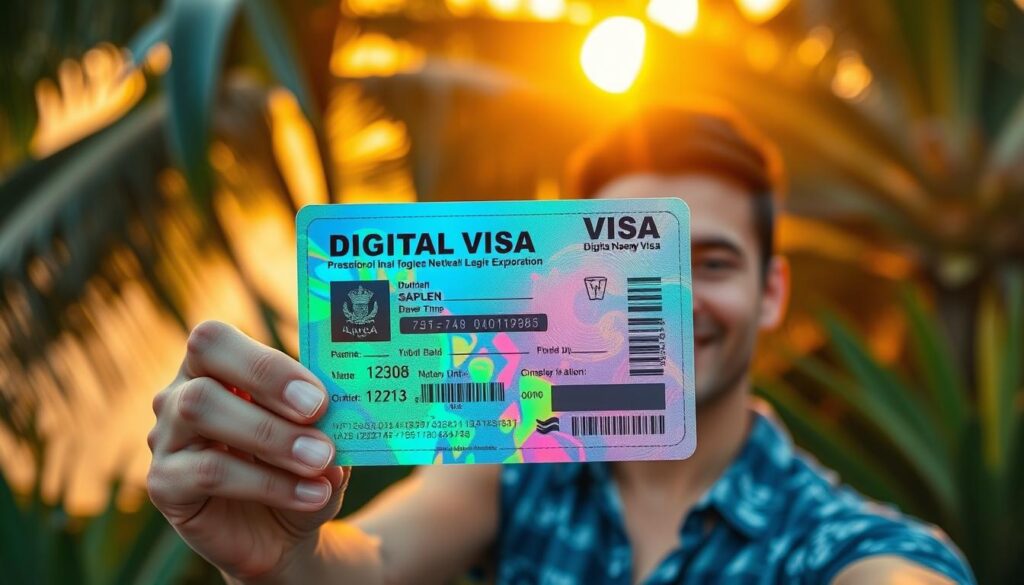
Tourist entry vs. working rights: Many people travel on tourist stamps that forbid paid work. Purpose-built visas remove that legal gray area and lower risk for remote workers.
Popular programs to consider
Flagship options include Estonia’s one‑year digital nomad visa, Portugal’s remote work permits, and Spain’s Startup Act with a 12‑month start and multi‑year renewals plus tax breaks.
Americas and islands
Costa Rica offers a one‑year visa (extendable) with income thresholds (about US$3,000 per month for individuals; US$5,000 for family). Brazil’s Resolution 45 and Antigua & Barbuda’s two‑year permit are other paths for longer stays.
Asia and Europe updates
Japan, South Korea (pilot), Latvia, Hungary’s White Card, and Malta now offer limited remote permits. The UAE’s Dubai program requires proof of employment and roughly US$5,000 monthly income.
Verify income, insurance, and document lists before applying — rules change fast.
| Program | Typical Length | Notes |
|---|---|---|
| Estonia | Up to 1 year | Path for remote workers |
| Spain | 12 months + renewals | Tax incentives; growing uptake |
| Costa Rica | 1 year | Income thresholds per month; extendable |
- Practical tip: decide if you want short stays or multi‑year renewals and check minimum income, insurance, and application timing.
- Since COVID, many U.S. workers chose domestic mobility before going abroad.
Your Remote Work Setup: Tools, Time, and Place
A compact, tested setup is the secret that keeps projects on schedule while you move between places.
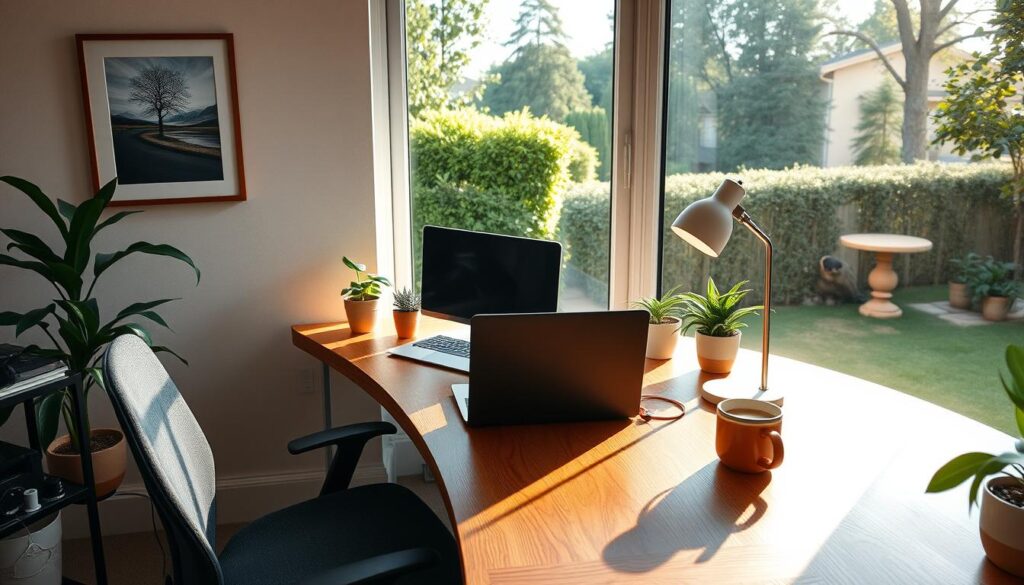
Core toolkit first: pick a dependable laptop, enable cloud backups, and use a password manager with MFA. Protect client data and keep work flowing during travel hiccups.
Connectivity and backups
Carry redundant connection options: local SIM, eSIM, and a portable hotspot. Test cafes and co‑working spaces for bandwidth and outlets before important calls.
Where to stay
Choose apartments with a good desk and light for longer stays. Co‑living offers fast community and lower set‑up time. Longer bookings often bring discounts and routine.
Time and team strategy
Map time zones to clients early. Set clear office hours, response windows, and block deep work when teammates are offline.
- Pack noise‑canceling headphones, a surge protector, laptop stand, and small webcam light.
- Use a VPN on public internet, enable device tracking, and avoid untrusted USB chargers.
- Keep a checklist for new apartments: router location, speed test, desk height, and chair comfort.
- Standardize file names, shared folders, and weekly archives to switch devices without losing momentum.
“Test your connection and a backup workspace before any big meeting.”
For ideas on side projects to support this setup, see side hustle options.
A Day in the Life of Digital Nomads
A typical day blends focused work blocks with short pockets of exploration and self-care.
Sample routine for a freelance writer and co‑founder based in Playa del Carmen: wake at 7:30, a quick stretch, and coffee while checking a short to‑do list. Most mornings begin slowly so attention is fresh for mid‑morning deep work.
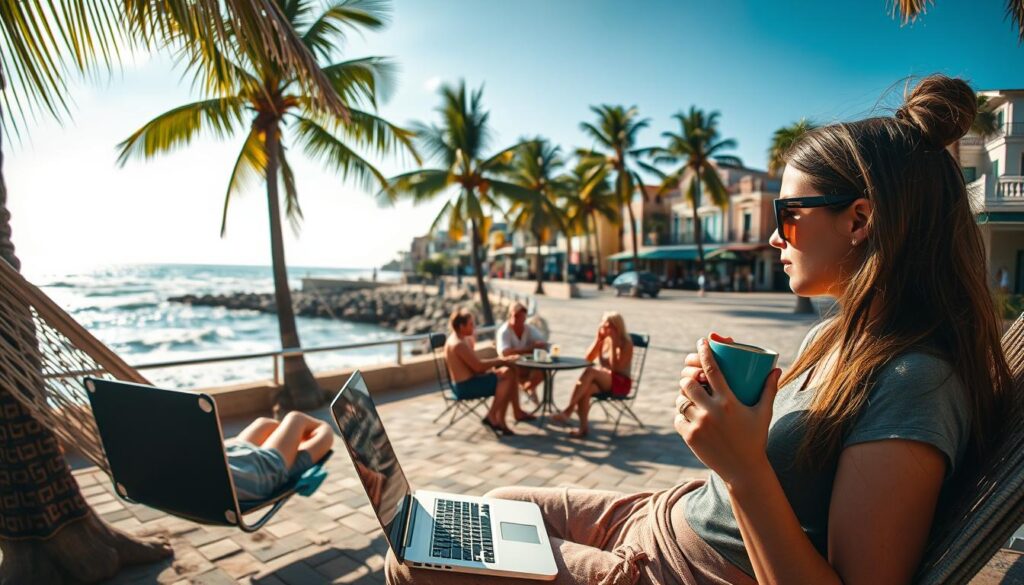
Morning focus and deep work
Work often starts around 9 a.m. from a balcony or cafes like Mi Dogo Cafe or Choux Choux Cafe. A two‑hour block handles writing and client tasks with minimal interruptions.
Lunch doubles as exploration: tacos by the beach or a walk down 5th Avenue before returning to messages and deliverables.
Afternoon rhythm and movement
Afternoons mix creative tasks and planning. Short breaks help keep energy steady.
Evening movement—gym, yoga, or a long walk—resets focus and protects health. Weekends might include cenotes, Tulum, or Chichen Itza, balanced with rest so the next day starts energized.
“It may sound like a vacation, but steady routines and hard work keep projects on track.”
Practical tips:
- Protect deep work by blocking time and silencing notifications.
- Shift your schedule if meetings ’ll take place at odd hours; protect sleep and batch tasks.
- Test cadences—when to work and when to explore—so the lifestyle fits you, not the other way around.
| Part of Day | Typical Activities | Why It Works |
|---|---|---|
| Morning | Routine, deep writing block | High focus, fewer interruptions |
| Midday | Lunch + short exploration | Recharge and local immersion |
| Afternoon | Creative work, planning | Progress on deliverables |
| Evening | Exercise, social time | Reset and community |
Curious to try this rhythm? Take a short test run and learn faster with a free course that helps you design a sustainable daily plan.
Community, Culture, and Impact
Meeting others near your temporary home often makes a place feel like a real neighborhood. In-person circles reduce isolation and help people trade referrals, feedback, and practical tips.

Finding others: co-working hubs, events, and social media groups
Look for weekly rhythms: co-working spaces, language exchanges, and Meetup or Facebook groups that host accountability sessions. Local Slack or Telegram channels often list events and short gigs.
- Join co-working communities for regular desks and instant contacts.
- Attend local workshops to meet both nomads and residents.
- Use social media groups to find weekend hikes, dinners, and collab nights.
Respectful travel: housing pressures and ‘transnational gentrification’ concerns
Be mindful of impact. Research shows workers can increase housing demand in hot zones. Choose longer stays outside tourist cores and negotiate respectfully with landlords.
“Support local shops, volunteer skills, and build friendships beyond the expat bubble.”
Practical etiquette: follow visa rules, respect quiet hours, sort trash, and learn basic phrases. Spend intentionally at cafes, markets, and gyms so your presence benefits the neighborhood.
Conclusion
Small, consistent actions turn travel dreams into a reliable work pattern you can scale.
We covered what a digital nomad is, why many people choose this lifestyle, the main challenges, and the systems that keep it stable. The jump from 17.3M in 2023 to 18.1M in 2024 shows real momentum for remote workers worldwide.
Start by skill‑building, creating samples, and landing a few clients. Then map a responsible move to your first country with strong infrastructure and a suitable visa—Spain, Portugal, and Estonia all offer targeted permits like a digital nomad visa.
With smart budgeting, a tested toolkit, routines that protect focus and health, and respect for host communities, you can become digital on your terms. For hands‑on income ideas, see get rich blogging.
FAQ
What does it mean to embrace freedom as a digital nomad?
Who typically works this way and what roles fit best?
Where do people usually get reliable internet while traveling?
Why do many people choose this lifestyle?
What are the biggest challenges to expect?
How should someone start transitioning from a regular job to location independence?
What entry-level ways can people earn while traveling?
How should I budget for monthly living and work costs?
Do I need a special visa to work abroad?
Which countries offer remote-worker visas or programs?
What gear and tools are essential for steady work on the road?
How do people manage different time zones with clients and teams?
What does a typical day look like for someone living this way?
How do travelers find community and avoid isolation?
What cultural or economic impacts should visitors be aware of?
Can anyone do this lifestyle or are there barriers?


