

High-yield checking accounts can turn everyday balances into small, steady income. Many banks and credit unions now offer rates that rise well above standard options, with some promotions reaching 5.00 apy.
This introduction explains key features and trade-offs. A reliable checking account keeps funds accessible while adding interest. Modern options vary by fees, minimums, and activity rules.
Understanding a single high-yield checking account helps you match features to your habits. Some plans reward debit use or direct deposits. Others limit balances that earn the top rate.
Use this guide to compare interest, fees, and eligibility. The goal is practical gains, not quick riches. Smart choices can make your checking accounts work a little harder for everyday money.
Key Takeaways
- High-yield checking accounts can offer meaningful extra interest on daily funds.
- Promotions have reached rates like 5.00 apy, but often with conditions.
- Compare fees, minimums, and activity requirements before switching.
- These accounts suit active spenders who meet reward rules.
- Use the guide’s criteria to pick the best checking account for your needs.
Understanding High-Yield Checking Accounts
Everyday balances can generate steady returns when placed in accounts designed for higher yields. These options keep your money liquid while paying interest that often beats standard offerings. Comparing features helps you pick the plan that fits your habits.
Defining the Concept
High-yield checking accounts function like typical checking but add a stronger percentage yield on qualifying balances. Institutions may reward debit use, direct deposits, or monthly activity. The result: an accessible checking account that also earns.
How Interest Works
The national average for an interest-bearing checking account sits near 0.07% APY, per the FDIC. By contrast, higher-rate options can deliver noticeably better returns on everyday money. Understanding annual percentage yield calculation clarifies how small gains compound over time.
“A modest APY can still grow balances if rules are met and activity is consistent.”

- Earn interest on routine balances while keeping funds available for spending.
- Top rates often require meeting simple monthly tasks.
- Compare fees, limits, and reward triggers before choosing.
| Feature | Standard Checking | High-Yield Option |
|---|---|---|
| Typical APY | ~0.07% | Variable; often higher than 0.50% |
| Liquidity | Full access | Full access with activity rules |
| Common Requirements | None | Debit use, direct deposit, or minimum transactions |
For a practical next step, see our savings guide for comparisons and steps to evaluate options.
How These Accounts Generate Passive Income
Letting routine funds sit in a rewards-style checking plan turns idle money into passive gains. By holding everyday cash in a rate-paying option, you can earn interest on balances that would otherwise do nothing.
These programs often credit interest when you meet simple steps like direct deposit or debit transactions. That means your regular spending and paychecks help grow the balance without extra effort.
Pairing this approach with a separate savings vehicle or brokerage can boost overall returns. The extra yield won’t replace a salary, but it adds a steady drip of income while your funds remain easy to access.
“Small, consistent yields compound over time and improve cash flow without active management.”
Benefits at a glance:
- Earn on daily balances while keeping full access.
- Requires little monitoring once rules are set.
- Complements savings and investment strategies.

| Feature | Passive Value | Typical Trigger |
|---|---|---|
| Idle balance earnings | Small steady returns | Monthly balance thresholds |
| Liquidity | Immediate access | No withdrawal limits beyond standard rules |
| Ease of use | Low maintenance | Auto-deposit and debit activity |
What to Look For in a High Yield Checking Account
Focus on features that turn routine deposits and spending into reliable returns. Decide if the plan fits your monthly habits before you switch. Use the phrase what to look for in a high yield checking account as a quick checklist when comparing offers.

Start with yield and fees. Compare interest rates against local banks and national online options. Check monthly maintenance fees and ATM costs so earnings are not erased.
Next, evaluate access and tools. Choose a checking account with strong mobile deposits, intuitive apps, and wide ATM networks. These features save time and avoid surprise charges.
- Minimums and activity: Verify opening deposits and required debit or direct-deposit activity for peak rewards.
- Digital tools: Look for mobile check capture and instant alerts.
- Accessibility: Confirm ATM access and branch options if you need them.
| Criteria | Good Option | Red Flag |
|---|---|---|
| Yield | Competitive APY above national average | Top rate only on tiny balance |
| Fees | No monthly fee with conditions | High maintenance fees |
| Tools | Robust mobile app, check deposit | Poor digital access |
Comparing Traditional and High-Yield Options
Some banks prioritize fast access and low fees, while others add interest for active users who hit monthly targets.
Traditional checking accounts focus on everyday convenience. They offer wide ATM networks, simple fee structures, and few activity rules. These plans suit users who want frictionless spending and predictable costs.
High-yield checking adds an earning layer. Institutions often require debit use, direct deposit, or other monthly tasks to qualify. Many of these offers come from online banks that pass savings from lower overhead on to customers.
Modern accounts increasingly blend features. Checking savings tools let users keep liquidity and modest growth under one roof. That integration simplifies money management and reduces transfers between accounts.
Choose based on your habits. If you meet requirements easily, a reward-style plan can boost returns. If not, a traditional plan may avoid surprise fees and extra work.

- Ease: Traditional offers low friction and broad access.
- Return: Reward-style gives interest if rules are met.
- Tech: Many high-rate options include robust digital tools.
| Feature | Traditional | Reward-style |
|---|---|---|
| Typical focus | Transactions and access | Earnings plus transactions |
| Requirements | Minimal | Monthly activity or direct deposit |
| Best fit | Low-effort users | Active spenders seeking extra yield |
The Role of Annual Percentage Yield
APY is the single metric that translates interest rules and compounding into a clear return. It shows the annualized percentage your balance will earn after compounding. Use it first when comparing offers.
Understanding Variable Rates
High-rate plans often advertise 3%–5% APY, with some promotions reaching 5.00 apy. That top figure can boost earnings, but remember it may depend on meeting monthly steps or on balance tiers.
Because annual percentage yield is often variable, banks can change rates with market shifts. Read the fine print for tiered rates, balance caps, and qualifying activities so you know which funds earn the top rate.
“The annual percentage yield is the most critical metric; it represents the real rate of return on your balance.”
- Compare APY: Look at the annual percentage, compounding frequency, and any balance limits.
- Watch variability: Expect rate changes with market conditions or bank policy.
- Check tiers: Some plans pay top APY only on a portion of funds.

| Metric | What it shows | Why it matters |
|---|---|---|
| APY | Annualized return after compounding | Helps compare offers accurately |
| Compounding | Daily, monthly, or quarterly | Affects effective earnings |
| Tier rules | Balance levels and qualifiers | Determines if full balance earns top rate |
Evaluating Monthly Maintenance Fees
Monthly maintenance can wipe out the gains from a high-yield checking account if you aren’t careful.
Many online banks now offer fee-free options. Choosing one of these keeps more interest in your pocket and boosts net return.
If your plan charges maintenance fees, confirm whether they are easy to waive. Common waivers include meeting a simple direct deposit or holding a minimum balance.
Read fee schedules closely. Hidden costs like overdraft charges and foreign transaction fees may reduce earnings more than the monthly fee itself.
“Minimizing maintenance fees is the fastest way to protect the interest you earn.”
- Pick fee-free accounts when possible.
- If fees apply, confirm clear waiver rules.
- Scan the schedule for overdraft and transaction costs.
- Compare net earnings after fees, not just the headline APY.

| Item | Fee-Free Option | Fee Applies |
|---|---|---|
| Monthly maintenance | No monthly maintenance | $5–$15 typical |
| Waiver methods | None needed or simple direct deposit | May require minimum balance or debit activity |
| Hidden costs | Low; transparent fee schedules | Overdraft, ATM, foreign transaction fees may apply |
To explore passive income alternatives that pair well with a low-fee plan, check our passive income ideas.
Importance of Minimum Balance Requirements
Banks often set a minimum balance rule to qualify for top rates, and that rule shapes how useful the account will be for you.
Minimum balance requirements help institutions ensure steady deposits. Some plans demand substantial sums before paying the advertised APY. Others reward modest holdings or have no minimum at all.
Failing to meet the threshold can mean loss of bonus interest or new monthly service fees. That defeats the purpose of earning more on daily cash.
Assess your cash flow before opening an account. Choose a plan that fits normal balances so you do not tie up funds or risk penalties.
“Pick an option that pays real net gains after fees and minimum rules are applied.”
- High minimums boost eligibility for top rates but reduce flexibility.
- Low or no minimums preserve liquidity for emergencies.
- Match required balances to typical monthly balances.

| Minimum Balance Type | Typical Benefit | Consideration |
|---|---|---|
| No minimum | Full flexibility, easy access | Often lower headline APY |
| Low minimum ($100–$1,000) | Good balance for modest earners | Usually easy to maintain |
| High minimum (>$5,000) | Access to top advertised rates | Ties up cash and raises risk of fees |
Managing Debit Card Transaction Minimums
A small habit change can protect the interest you expect. Many reward programs require regular debit use to qualify.

Meeting Monthly Quotas
Most high-yield checking account plans ask for a set number of debit card transactions per month. Banks often count everyday buys like coffee, groceries, or streaming payments.
Use your debit card for routine expenses and set phone alerts. That makes it easy to reach the needed card transactions each billing cycle and meet requirements without extra spending.
Impact of Missed Transactions
If you fail to hit the quota, the top APY may vanish for that cycle. That means the checking account will earn little or no interest until you meet the rules again.
“Missing a few swipes can cost you the advertised yield for a whole month.”
- Track progress with app alerts.
- Use small recurring purchases to hit totals.
- Link direct debit bills when allowed.
| Scenario | Effect | Quick Fix |
|---|---|---|
| Quota met | Earn advertised APY | Keep using debit for daily buys |
| Quota missed | No interest paid that cycle | Set reminders; schedule small purchases |
| Near quota | Risk of missing at month end | Check app; complete a small purchase |
Benefits of Direct Deposit Integration
Automating deposits from payroll or benefits makes it far easier to meet a bank’s reward rules each month.
Direct deposit often serves as the simplest qualifier for top interest. With a properly set direct deposit, your pay lands immediately and counts toward monthly requirements. That helps you keep qualifying status without extra steps.
Many banks reward steady funding. For example, SoFi offers 3.30% APY on linked checking and savings when an eligible direct deposit posts. This type of setup turns routine payroll into a steady way to earn more.
Automated direct deposits remove manual transfers and reduce the risk of missing a qualification. They also make budgeting easier because funds are available right away. Always confirm routing details with your employer or benefits provider so the deposit meets the bank’s rules.
“Set it once, and recurring deposits help you maintain bonus rates month after month.”
- Reliable qualification: Keeps your checking account in reward status.
- Immediate access: Funds post quickly for bills and spending.
- Less effort: Automation reduces missed months and paperwork.

| Benefit | Impact | Example |
|---|---|---|
| Automatic qualification | Fewer missed months earning rewards | Direct deposit from employer |
| Faster availability | Better cash management for bills | Paycheck posts same day |
| Higher yields | Consistent bonus APY on balances | SoFi 3.30% APY account example |
| Less maintenance | Lower manual transfers and errors | Set and forget direct deposits |
Assessing Digital Banking and Mobile Tools
Today’s banking apps do more than show balances; they help you earn and manage interest.
Real-time access matters. Live balance and transaction views let you confirm qualification status each month. That reduces surprises and keeps rewards intact.
Mobile deposit is essential. Remote check capture preserves momentum for your checking savings by letting deposits post quickly without branch trips.

Smart features such as spending analytics, budgeting tools, and category alerts help you meet debit or deposit targets without extra work.
Security should never be an afterthought. Biometric login, instant fraud alerts, and two-factor authentication protect balances and personal data.
“A clean interface that surfaces key metrics makes meeting monthly rules easy and less stressful.”
- Look for: clear interest summaries and transaction filters.
- Prefer: apps with auto-notifications and simple mobile check deposit.
- Choose: providers that balance strong security with an intuitive UI.
For more ways to grow everyday cash while preserving access, see our best way to save money.
Security and FDIC Insurance Considerations
A safe bank and strong digital safeguards let your everyday money earn without extra worry.
Confirm federal deposit protection before opening a high-yield checking account. SoFi Bank, N.A. is a Member FDIC, which means deposits are insured up to the standard limits.
FDIC coverage protects funds up to $250,000 per depositor, per ownership category. That protection remains the best defense against bank failure while your balance earns interest.
Even if a provider is online-only, verify its Member FDIC status. Look for the bank’s legal name and confirmation in disclosures or on the FDIC website.

Security practices matter too. Reputable checking accounts use encryption, multi-factor authentication, and instant fraud alerts. These features reduce the risk of cyber theft and identity fraud.
“Choose a Member FDIC bank to combine higher rates with federally backed safety.”
- Why it matters: Federal insurance preserves principal up to limits.
- Verify status: Confirm Member FDIC before funding the account.
- Digital safety: Prefer banks that offer MFA and real-time monitoring.
Potential Drawbacks to Keep in Mind
Small percentage gains can feel meaningful until fees and limits bite.
The Reality of Modest Returns
Even strong offers have limits. One major cons high-yield checking point is that returns remain modest over time.
Remember that even the best options currently top out near 5.00 apy. That rate helps, but won’t replace a salary or large investment gains.
Fees may reduce net profit. Monthly charges, ATM costs, or overdraft fees can quickly reduce earnings if you’re not careful.
If you miss required transactions, a bank may drop your rate to zero for that cycle. That rule can erase the benefit of holding funds in reward plans.
“Weigh interest gains against the effort needed to meet rules.”
- Compare advertised APY with likely monthly balance and activity.
- Factor in possible hidden costs that could reduce earnings.
- Decide if the time spent managing the plan is worth the small dollar return.

For practical money habits that complement a rewards plan, see our how to save money guide.
Strategies to Maximize Your Interest Earnings
Make your rewards work harder by treating one checking hub as your everyday money center. Use that single place for bills, groceries, and subscriptions so you meet monthly qualifiers without extra effort.

Use your debit card for regular purchases and small recurring charges. Hitting the required number of debit card transactions per month is often the key to unlock the top APY.
Keep a steady balance. Many banks calculate interest using your average daily balance, so consistency per month helps you earn interest more reliably.
Automate moves from this checking account into a separate savings vehicle. Regular transfers build long-term savings while keeping enough spendable funds in checking.
Review statements each month. Rules can change, and periodic checks ensure you continue meeting criteria and avoid surprise losses of bonus interest.
“Small habits—consistent spending, steady balances, and automation—add up to meaningful extra returns.”
- Primary hub: Centralize spending so qualifiers are met automatically.
- Debit use: Favor card transactions for routine buys to meet monthly quotas.
- Automation: Set scheduled transfers into savings for goals and protection.
For steps on pairing this strategy with a savings plan, see our savings guide.
Determining if a High-Yield Account Fits Your Lifestyle
Ask whether your monthly habits naturally match an account that rewards activity and balances.
If you use mobile banking comfortably, a high-yield checking account can add real value without much effort. Digital tools and automatic direct deposit make qualification simple for many people.
If you prefer hands-off banking, the transaction or balance rules may feel burdensome. Missing a requirement can negate the benefit and invite fees.
Disciplined spenders who centralize bills and daily purchases often unlock the best returns. That approach keeps the needed debit activity steady while preserving liquidity in checking savings.

“Match account rules to real habits so rewards arrive without extra stress.”
- Evaluate average balances and typical monthly transactions.
- Consider whether meeting rules increases overdraft risk.
- Decide if earned interest outweighs time spent managing the plan.
| Fit Factor | Good Match | Red Flag |
|---|---|---|
| Digital comfort | Strong app, remote deposits | Relies on branches only |
| Spending habits | Regular debit use, steady deposits | Irregular transactions, low balances |
| Net benefit | Interest exceeds fees | Fees erase gains |
For practical steps on saving and matching rewards accounts with goals, see our saving tips.
Steps to Open Your New Account
Opening a new rewards-style checking starts with clear ID and a few simple steps. Have your Social Security number, current address, and a government-issued photo ID ready.
Be ready with an initial deposit. Many banks require a minimum opening deposit or opening deposit to activate the rate and begin earning interest.
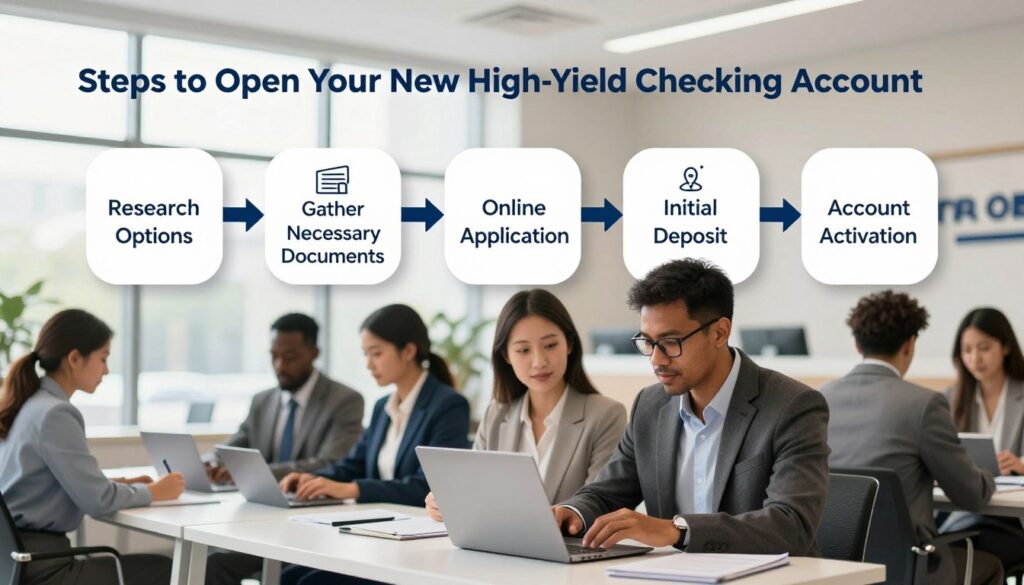
- Provide personal details and upload ID during the online application.
- Confirm the minimum opening deposit amount and fund the account when asked.
- Check your history with ChexSystems; significant negatives can block approval.
- Complete identity verification electronically so you can open new accounts from home.
After approval and when the minimum opening deposit posts, the bank will mail your debit card and supply account details. Use the new checking account for bills and daily buys so qualifiers are met and interest starts working.
“Have paperwork and funding ready; the online process is fast when you are prepared.”
Conclusion
Small habit changes can unlock meaningful extra interest on money you already spend and save.
Choosing the right high-yield checking account means balancing competitive annual percentage yield with low fees and simple rules. Pick an option that matches your monthly habits so rewards stick without extra work.
Confirm Member FDIC status and compare interest rates from banks that currently offer strong deals. Institutions such as Axos Bank, Presidential Bank, Heritage Bank, and Quontic Bank are among those many consumers consider when seeking the best high-yield checking options.
Use your debit card for routine buys, keep one checking account as your hub, and move excess into a linked savings account. Review terms yearly so the accounts offer you real, net gains and remain the best high-yield fit for your goals.
FAQ
What are high-yield checking accounts and how do they differ from regular checking?
How does the annual percentage yield (APY) get calculated for these accounts?
What fees could reduce my earnings on a high-yield option?
Do I need a minimum opening deposit or minimum balance to earn the advertised APY?
How many debit card transactions are typically required each month?
Will direct deposit help me earn the higher APY?
Are high-yield checking accounts FDIC insured?
How do variable interest rates affect my earnings?
What are the main drawbacks of these accounts?
How can I maximize interest from a checking-savings strategy?
Should I choose a high-yield checking or a high-yield savings account?
How quickly can I open a new account and start earning interest?


