

Start small, think big. That’s the America Saves approach and a practical way to build an emergency fund. Aim for an initial $500 cushion and build from there. This piece gives clear, realistic habits you can use right away.
Saving does not need to be extreme. It works best as a set of repeatable systems when schedules are tight and bills rise. NerdWallet finds 46% of Americans plan to save for emergencies in 2026, while 51% expect prices to get worse. That makes small wins worth pursuing now.
We preview five plain strategies: track spending and set a budget, cut recurring costs, use cash-back tools wisely, plan meals and cook at home, and automate transfers. Pick one as your first win and build confidence from there.
This article also explains how to keep goals realistic, how debt fits into a plan, and how to avoid common traps like rewards-driven overspending. Friendly, skimmable sections and quick next steps will help you start today. Visit our resource page for more support.
Key Takeaways
- Small, steady moves beat one-time sacrifices.
- Start with a $500 emergency fund if you can.
- Choose one easy strategy to win quickly.
- Automate savings and trim recurring costs.
- Watch rewards that encourage overspending.
Why saving feels harder right now (and why small wins matter)
When paychecks stay flat and everyday bills climb, budgets quickly feel tight. Groceries, utilities, and insurance push monthly totals up while income often lags behind.

Hidden costs make the squeeze worse. Higher delivery fees, subscription price hikes, and impulse online spending add invisible leaks that inflate the month without obvious warning.
How rising costs change habits
You’re not alone: 51% of Americans expect prices to get worse in 2026, and 46% plan to save for emergencies next year. That validates why many households feel pressure now.
Start small and build momentum
Small wins matter. Saving a few dollars regularly builds confidence and moves you toward larger goals over time.
- Pick a realistic first goal—America Saves suggests $500 as a starter emergency fund.
- Make saving a home routine: weekly check-ins and one small change at a time.
- Focus on consistent progress this month so momentum grows into next year.
What are 5 tips for saving money?
Pick one easy habit today and watch monthly progress turn into big gains. Below is a short, scannable list of five practical ways you can use right away.

- Track spending and set a simple budget. Log a month of purchases, try the 50/30/20 split, or use an envelope approach to control lapses.
- Cut recurring costs. Audit subscriptions, call providers, and trim services that add up to lower bills each month.
- Use cash-back tools and apps wisely. Leverage extensions and a cash-back card for planned buys, but avoid extra purchases just to earn points.
- Plan meals and cook at home. Meal planning, bulk cooking, and freezing leftovers reduce waste and make the month feel less expensive.
- Automate savings from each paycheck. Set up automatic transfers so savings happen without thinking—this makes savings goals routine, not a test of willpower.
Budgeting doesn’t mean no fun. It means choosing where your dollars go so savings becomes the default outcome. Small, repeated wins build confidence and larger savings over time.
Want practical how-to steps? Read the detailed guides in the next sections or visit our save money resource to get started.
Track your spending and set a budget you’ll actually use
A clear budget begins with tracking a single month of purchases and bank activity. Collect receipts, check card transactions, or use an app that pulls in each account entry. Group buys into real categories like groceries, restaurants, subscriptions, gas, and personal care.

Track a full month to find money leaks
One month of honest data reveals small add-ons and forgotten charges. Those tiny conveniences add up and show where the real leaks are. Once you see the pattern, set one cap for a problem category (like restaurants) and one minimum for saving.
Try a simple framework like 50/30/20
50/30/20 splits net income into needs, wants, and savings/debt. Adjust percentages if housing, childcare, or debt shifts your reality. The point is a usable guide, not a strict rule.
Use the envelope system when plastic tempts you
If a credit card makes overspending easy, try cash envelopes for variable categories. When the cash is gone, you pause spending. This tactile way helps control the amount and builds discipline quickly.
Measure progress with monthly cash flow
Do a monthly cash flow check: income minus expenditures. That math shows if the budget is realistic and where to cut or reallocate. Keep it simple — one spreadsheet or one app — and repeat each month.
| Action | What to track | Quick result |
|---|---|---|
| Track one month | Receipts, transactions, app export | Identifies small leaks |
| Apply 50/30/20 | Net income split into needs/wants/savings | Simple guideline you can tweak |
| Use envelopes | Cash for variable spending | Limits overspending from cards |
| Check cash flow monthly | Income minus expenditures | Shows gaps and progress |
Keep the system small and repeatable. One cap and one minimum make a budget feel usable, not punishing. For ideas on turning extra income into savings, see our guide on passive income strategies.
Reduce recurring expenses and negotiate lower rates
A short audit of monthly charges can free up dozens of dollars fast. Recurring payments are often “set and forget,” so they quietly drain your budget without a second thought.

Audit subscriptions and free trials to eliminate forgotten charges
Scan bank and card statements to spot recurring fees. Cancel services you no longer use and add calendar reminders to cancel free trials before they auto-renew.
Call internet, phone, and insurance providers to request better rates
Retention teams often offer lower rates, promotions, or plan downgrades if you call. Ask about discounts and bundled plans — insurance carriers may lower premiums for safe drivers, autopay, or multi-policy bundles.
Lower utility costs with small home energy changes that add up
Simple moves—seal drafts, swap to LED bulbs, unplug idle electronics, and set a smart thermostat—reduce bills over time. These low-effort fixes cut costs without major upgrades.
Bigger levers exist too: refinancing a mortgage can lower monthly payments, but weigh closing costs and the break-even timeline first.
Recurring savings tally: Track each cut per month and multiply by 12 to see the annual impact. This quick math makes the benefit real and shows a clear way save more this year.
Use cash-back, coupon, and shopping tools to save money on planned purchases
Only use deals when the purchase is planned. Tools can lower the price on items you already intended to buy. They should not be a reason to add extra purchases.

Stack savings with extensions and price trackers
Start with Rakuten for cash back, then run PayPal Honey to apply coupon codes. Check Camelizer (Camelcamelcamel) to confirm Amazon price history before you click buy.
Use cash-back credit cards responsibly
Rewards only help if you avoid interest. Treat a cash-back credit card as a tool, not free money. Pay the statement in full each month so interest does not erase the dollars you earn.
- Set one card for essentials like gas and groceries and enable alerts to track spending.
- Compare final totals—shipping, taxes, and minimums—so the discount is real.
- Take advantage of sale cycles for big purchases, but wait 24–48 hours before deciding.
Quick checkpoint: If rewards make you spend more overall, stop and return to your budget.
Cut food costs by cooking at home and planning meals
Small shifts in how you eat at home can free up meaningful dollars each month. Meal planning forces one decision up front so impulse buys decline and waste drops.

Meal plan with a grocery list: Check the pantry and freezer first. Pick a few repeatable meals, write a focused list, and stick to it to avoid impulse purchases.
Brown-bag example that adds up
A lunchtime purchase at $5 versus a homemade lunch at $2.50 saves $2.50 per day. Over 200 workdays that equals $500 — the exact amount many use as a starter emergency fund.
“Redirect $50 a month from takeout into savings to make the tradeoff visible and motivating.”
Double recipes and freeze leftovers
Cook chili, pasta bakes, or soup and freeze half. When time is short, reheating a portion is faster than ordering delivery and keeps costs low.
- Keep 2–3 low-cost pantry meals ready.
- Build shopping around sales to lower the total amount spent.
- Plan one flex night to prevent burnout and keep the plan realistic.
Limit delivery — even skipping DoorDash once a month helps. CFP advice suggests moving $50 a month from takeout to savings; that small redirect saves hundreds per year without drastic change.
Need ideas to convert those savings into extra income or stash them quickly? Try this short guide to extra cash.
Automate your savings to build an emergency fund faster
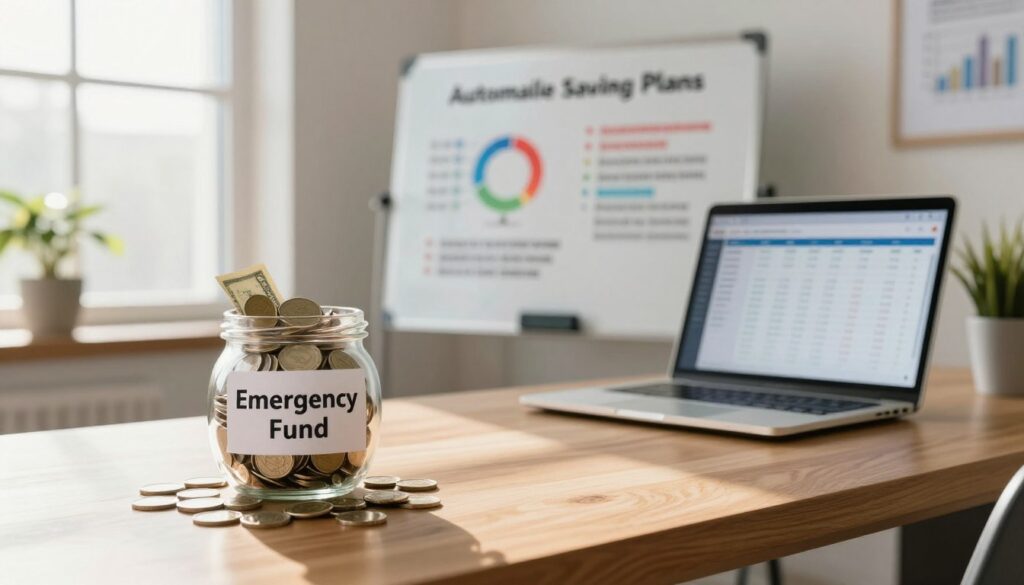
Let your accounts do the heavy lifting: automate deposits and watch your emergency fund grow. Automatic moves make saving a default before everyday spending can absorb the dollars.
Use direct deposit or automatic transfers
Pay yourself first by routing part of each paycheck to a separate savings account. Ask your employer to split direct deposit or set a bank transfer on payday.
Choose a high-yield savings account
Select an account that pays a competitive interest rate so each deposit earns more than a basic checking. Higher interest helps the emergency fund grow faster with the same monthly amount.
Start small and scale up
Begin with a $500 emergency fund target. Once the habit is steady, increase the deposit. Use separate buckets or accounts to keep this cushion distinct from other goals.
Try round-up apps and troubleshoot overdrafts
Round-up tools move spare change into savings automatically, making progress feel painless. If transfers cause overdrafts, lower the transfer amount and rebuild—consistency matters more than size.
| Automation option | How it works | Quick benefit |
|---|---|---|
| Employer direct deposit split | Route part of each paycheck to savings | Hands-off, immediate deposit |
| Bank scheduled transfer | Set date-aligned transfer on payday | Reliable cadence you control |
| High-yield account | Deposit into an account with better interest rate | Faster balance growth |
| Round-up app | Spare change moves to a linked account | Painless, frequent micro-deposits |
Keep your savings goals realistic and make room for debt payoff
Saving with purpose means naming the goal, the amount, and a finish date. That turns vague plans into a math-based target you can track each month.

Set a specific, measurable target
Write down what you’re saving for, a dollar total, and the target year. Use a simple calculator or spreadsheet to find the needed monthly deposit. NerdWallet recommends this so your plan is based on numbers, not hope.
Balance savings and high-interest debt
If you carry high-rate debt, split extra cash between an emergency cushion and debt payments. Even adding $25–$50 to monthly payments cuts principal and lowers total interest paid over time.
Use autopay to protect progress
Set autopay on loans and regular transfers into a separate account. On-time payments avoid fees and may earn interest-rate discounts from some lenders.
Revisit goals when income, expenses, or debt status changes. As short-term stability grows, increase retirement contributions so long-term plans benefit too.
For planning inspiration, see 11 inspiring ways to achieve your.
Conclusion
Start small, think big. Wrap up with a simple plan: turn one small change into a steady habit and watch your balance grow.
Quick recap: track spending, cut recurring costs, use cash-back tools on planned buys, cook more at home, and automate transfers. These ways stack—each adds to your overall savings and reduces stress.
Pick one action today: track a week, cancel one subscription, or set a single automatic transfer. Then review accounts and schedule one bill-negotiation call to make progress measurable.
Consistency beats intensity. Small steps built into a clear budget create compounding wins. For ideas to turn extra funds into passive streams, see passive income.
FAQ
What are five simple strategies to boost savings?
Why does saving feel harder right now and why do small wins matter?
How do rising costs influence monthly expenses and spending habits?
How can I start small and build momentum with a realistic first goal?
How do I track spending and create a budget I’ll actually use?
What’s an easy way to cut recurring costs and lower monthly bills?
How can cash-back tools, rewards, and apps help without encouraging overspending?
How does meal planning and cooking at home reduce food costs?
What’s the simplest way to automate savings so it happens every paycheck?
How do I track a full month of purchases to find my biggest money leaks?
How does the 50/30/20 budget framework work and can I modify it?
When should I use the envelope system instead of cards?
How do I measure progress with monthly cash flow?
How should I audit subscriptions and free trials to stop forgotten charges?
What’s the best way to negotiate better rates with service providers?
Which home energy changes cut utility costs quickly?
How can browser extensions and deal trackers help me stack savings?
How do I use cash-back credit cards responsibly?
What are practical meal-planning steps to lower grocery bills?
How much can I save by brown-bagging lunch and cutting deliveries?
How does doubling recipes and freezing leftovers help both time and cost?
What’s the easiest way to automate an emergency fund build-up?
Which savings accounts offer higher interest rates for deposits?
How big should my starter emergency fund be?
How do round-up apps work and are they worth using?
How do I set realistic savings goals while addressing debt?
How can extra payments reduce interest costs on loans?
Why use autopay for bills and how does it help with rates?


