

Influencer marketing uses creator endorsements to build trust and drive buys. Creators who earn real followings offer powerful proof that nudges audiences to act.
Today the field stretches beyond celebrities into a wide ecosystem of niche voices. Authentic content and tight communities shape tastes and purchases in the United States.
Fresh data shows the impact: 86% of consumers buy at least once a year because of influencer posts, and 49% buy monthly. Industry forecasts expect the market to hit $33 billion by 2025.
This guide balances strategy and execution. You’ll learn how to pick partners, plan campaigns, set budgets, measure outcomes, and follow FTC rules for clear disclosures.
Trust and authenticity are the currency: creators win when content feels native, personal, and aligned with audience values. Expect practical templates and pitfalls to avoid.
Key Takeaways
- Creators offer persuasive recommendations that act as social proof.
- Influencer marketing complements social media marketing across the funnel.
- Major stats show strong consumer purchase behavior and market growth.
- Compliance with U.S. FTC rules matters for transparent partnerships.
- Practical steps in this guide will help map partners to business goals.
What Are Social Media Influencers and How Do They Shape Modern Marketing
Everyday creators with loyal followings now shape buying decisions and cultural trends. In practical terms, influencer marketing uses endorsements and product mentions from people who have built trust in niche communities.
Definition: These creators are niche experts whose personal authority becomes measurable marketing impact. Their recommendations act as social proof because followers view firsthand use as more credible than banner ads.

Evolution: Influence moved from celebrity megaphones to community builders. Macro, micro, and nano creators post consistently, answer comments, and co-create culture across Instagram, TikTok, and YouTube.
“When a trusted creator shares a real experience, audiences feel lower risk and higher clarity.”
- Native content outperforms scripted ads because it matches platform norms.
- Type content like short video, carousels, livestreams, and reviews map to different funnel stages.
- Creators create discovery, educate on features, and nudge action with links or codes.
Preview: types influencers vary by reach and cost. The best media influencers balance brand rules with creativity to preserve trust and deliver results.
Why Social Media Influencers Matter Right Now
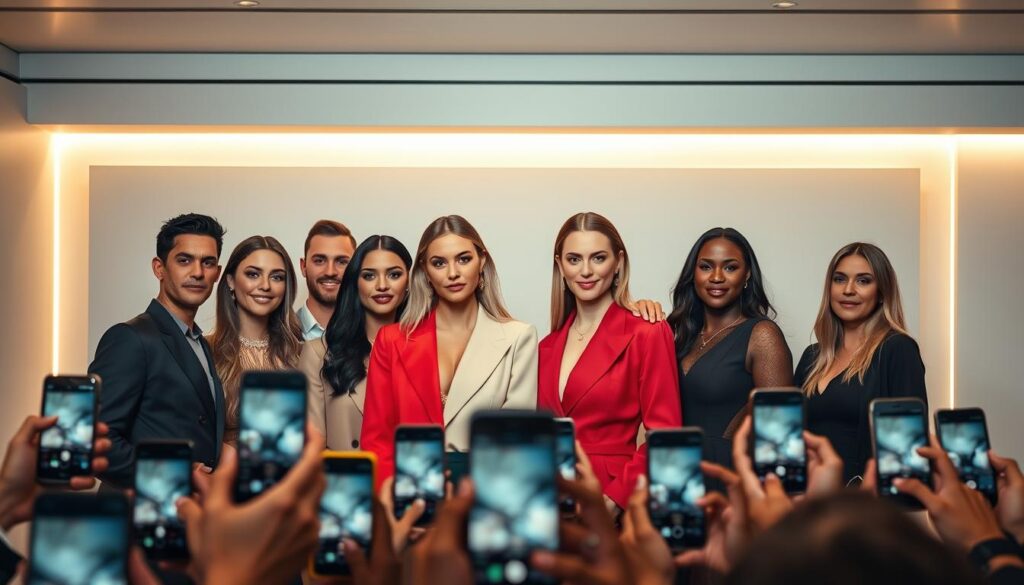
Creators who feel like real people now drive trust and buying decisions more than polished ads.
Consumer behavior has shifted. The 2024 Influencer Marketing Report finds 86% of buyers make at least one purchase a year from creator posts, and 49% buy monthly. These figures show clear momentum.
Trust comes from relatable, unscripted content, transparent partnerships, and active comment replies. Those signals reduce perceived risk and raise conversion rates.
Brand awareness, targeting, and conversions
Creators accelerate brand awareness by introducing products to audiences that match a marketer’s segment and values.
- Precise targeting: match an influencer’s demographics and interests to your ideal customer.
- Conversion mechanics: sharing personal experiences, interactive formats, and exclusive codes nudge purchases.
- Measurable signals: engagement quality, saves, shares, and link clicks matter more than raw reach.
“Engagement quality beats vanity reach; community replies and Q&A build credibility ads can’t match.”
| Benefit | How it Works | What Brands Want |
|---|---|---|
| Faster awareness | Creators place products in native feeds that audiences trust | Relevant reach and audience fit |
| Precise targeting | Demographic and interest alignment with followers | Lower CPA and better ROAS |
| Higher conversions | Authentic demos, codes, and interactive CTAs | Clear attribution (links, promo codes) |
How much creators move performance depends on audience fit, creative quality, posting frequency, and offer strength. Align campaign goals—awareness or sales—with creator choice and content format for best results.
Types of Influencers by Follower Count and Reach
Follower tiers define how far a message travels and how deep it lands with an audience.

The table below summarizes common tiers by follower count, typical costs, and where each shines.
| Tier | Follower Count | Typical Strengths | When to Use |
|---|---|---|---|
| Mega / Celebrity | 1,000,000+ | Mass reach, splash launches, strong name recognition; often lower engagement rate | Large national campaigns and brand awareness pushes |
| Macro | 100,000–1,000,000 | Category authority, sizable reach, more targeted audiences than mega | Product category credibility and wide niche launches |
| Micro | 10,000–100,000 | High engagement, authentic demos, affordable per-post rates | Deep vertical targeting and scalable micro-influencer marketing batches |
| Nano | 1,000–10,000 | Close-knit communities, personalized collaborations; rising brand preference (44% in 2024) | Local campaigns, testing messages, and driving trust-driven conversions |
Remember: follower count is one dimension. Evaluate engagement quality, audience demographics, and creative fit to avoid wasted spend.
“Smaller creators often outperform on cost per engagement when the audience aligns with your product.”
Mega or celebrity voices: scale and trade-offs
Mega accounts give unmatched reach but tend to cost more and show lower engagement rates. Use them for splashy launches or cultural moments.
Macro voices: niche authority with sizable reach
Macro creators balance reach and credibility. They work well when category credibility matters and budgets allow.
Micro voices: 10,000–100,000 highly engaged followers
Micro creators bring strong platform presence and authenticity. Brands can scale results by running many partnerships through a marketing hub.
Nano voices: 1,000–10,000 fans and tight-knit communities
Nano creators excel at trust and personalization. With 44% of brands preferring nano partnerships in 2024, this tier is ideal for local and niche outreach.
Pro tip: Combine tiers in a pyramid: a few macro or mega placements plus many micro and nano partners. Use an influencer marketing hub to filter by tier, audience traits, and safety signals efficiently.
Choosing the Right Fit: Aligning Influencers With Your Brand Strategy
Choosing creators who mirror your customers’ habits and values sets the foundation for measurable campaigns.
Start with audience fit. Confirm age, location, gender split, and interests match your ideal customer profile. Ask for audience reports or analytics to avoid guesses.

Brand fit, audience demographics, and topical alignment
Look for topical alignment: past posts should show real interest in your category. Review press kits, case studies, and prior brand partnerships to assess professionalism.
Engagement over follower count to protect ROI
Engagement rate, comment quality, saves, and shares reveal influence better than raw follower count. High-quality comments and repeat interactions predict stronger conversions.
- Define goals and target audience before outreach.
- Map topical alignment and screen for brand safety.
- Compare demographics and psychographics to your ICP.
- Pilot small campaigns, then scale top performers.
“Scale with creators who genuinely use or admire your product to protect long-term credibility.”
Tip: Micro- influencers often deliver niche reach with lower cost and higher authenticity. Structure brand partnerships with clear guardrails but allow creative freedom to preserve trust.
Influencer Marketing vs. Affiliate Marketing
Brands must choose between direct, commission-driven traffic and content-led partnerships that build lasting trust.

Affiliate marketing runs on links, cookies, and commission. Affiliates earn a cut when clicks convert, so the model favors clear, trackable sales and last-click attribution.
Influencer marketing focuses on storytelling, product education, and audience engagement. Creators can drive awareness, consideration, and purchases while building brand equity.
- Affiliate mechanics: links, tracking pixels, and commission-driven payouts for measurable sales.
- Influencer collaborations: content-led narratives, multiple KPIs, and creative usage rights.
- Hybrid models: creators include affiliate links inside longer-form content to marry story with conversion.
Compensation differs: affiliates typically get revenue share; creators expect fees, usage rights, or blended deals. Consider tiered incentives—base fee plus bonuses for sales and engagement.
“Use affiliates for immediate, measurable ROI; use influencer marketing to win trust and mental availability.”
Measure wisely: pair last-click attribution with multi-touch models and UTM codes. Many U.S. brands run both in parallel to match short-term sales and long-term credibility. Always include clear disclosures in brand partnerships to protect trust and comply with rules.
Building an Influencer Marketing Strategy
Begin with the result you want: awareness, clicks, leads, or sales. Name one clear goal and map it to measurable KPIs. That focus keeps creative briefs tight and budgets efficient.
Set goals and messaging for your target audience
Define buyer personas, pain points, and the desired call to action. Use SMART goals so every post ties to the funnel stage it should influence.
Pick the right platforms like Instagram, TikTok, YouTube, Twitch
Choose platforms like Instagram and YouTube for longer demos, TikTok for short-form reach, and Twitch for live gaming communities. Match platform norms to the type content you need.
Plan creative concepts, formats, and sponsored posts
Outline story arcs and deliverables: Reels/Shorts, long-form reviews, lives, and sponsored posts. Give creators assets and talking points, but let them keep their voice.

Measure from day one. Use social media analytics, UTM tags, and promo codes to track performance. Start small, pilot variations, then scale winners into repeatable marketing campaigns.
“Clear goals plus creator freedom deliver authentic content that converts.”
For tactical tips on short-form growth and working with tiktok influencers, see this short guide on how to get followers on TikTok.
How to Find Influencers Who Align With Your Brand
Finding creators who truly reflect your brand starts with listening to what audiences already discuss online. Use that insight to guide outreach and shortlist talent that matches your tone and goals.

Social listening and media analytics
Begin with social listening to spot trending topics, hashtags, and creators already advocating your category. This reveals audience needs before you reach out.
Apply media analytics to measure audience overlap, engagement quality, and content fit with your buyer personas. Look at comments, saves, and shares—not just follower count.
Using an influencer marketing hub
Leverage an influencer marketing hub or AI-powered platform to search by niche, demographics, content formats, and brand safety scores. These tools speed vetting and suggest matches.
Compare creator press kits and past branded content to confirm experience, deliverables, and rates. Shortlist across platforms like Instagram, TikTok, and YouTube based on where your audience lives.
Spotting fake followers and low-quality engagement
Vet engagement closely: sudden follower spikes, generic bot comments, and mismatched audience geographies are red flags for fake followers. Check ratio of likes to comments and comment authenticity.
- Investigate engagement patterns and repeat interactions.
- Review portfolios to ensure topical expertise and creative fit.
- Plan outreach: agencies for macro talent, DMs or platform tools for micro and nano creators.
“AI-driven platforms and careful listening reveal better matches than raw reach alone.”
Tip: Keep a central database with audience traits, engagement notes, and pricing history to speed future campaigns and help align brand fit across partners.
Budgeting, Influencer Rates, and ROI Modeling
A smart budget ties expected results to what creators will actually deliver and how content will be reused.

Interpreting rate cards: rate cards list base fees, deliverable counts, edits, usage rights, and whitelisting. Ask which platforms are included, how long you may repurpose content, and whether paid amplification is allowed.
What drives price
- Tier and platform: higher reach raises fees.
- Vertical demand and exclusivity: category competition and non-compete clauses add cost.
- Turnaround, revisions, and performance add-ons like bonuses for sales.
Modeling ROI vs other media
Build a simple forecast: set CPM/CPE targets, estimated conversion rate, AOV, and content lifespan. Compare that output to video production or paid placements to see relative value.
Key levers: creative quality, offer strength, posting cadence, cross-posting, and paid boost. Use media analytics to track attribution and refine spend.
“Start small: test budgets, measure early signals, then scale top performers.”
Budget rule: allocate a test pool for much influencers and a contingency fund for standout content you want to amplify or reuse in ads. When immediate sales matter, weigh affiliate marketing and commission models against flat creator fees for brand awareness and long-term value.
Outreach, Negotiation, and Brand Ambassador Programs
A focused outreach message saves time and wins replies from the right creators. Start with a one-paragraph brief, clear deliverables, and your top KPI.

Contacting macro vs. micro and nano creators
Macro and celebrity creators often route requests through agencies. Pitch concise campaign goals, usage rights, and proposed influencer rates up front.
Smaller creators with 1,000 10,000 followers reply to direct DMs or email. Use a friendly template: one-line intro, “why you”, deliverables, timelines, and compensation offer.
Structuring a brand ambassador program
Design a short term sheet: selection criteria, term length, content cadence, and perks. Brands like Fujifilm use ambassadors to amplify launches and feature highlights.
- Negotiate bundles, exclusivity windows, and performance bonuses.
- Set creative freedom with a review SLA and approval timeline.
- Govern with content calendars, shared dashboards, and asset management.
“Compensation and scope must be crystal clear to scale long-term partnerships.”
KPIs: awareness reach, engagement quality, saves, link clicks, and redemptions. Align rewards to value: tiered payouts, product stipends, early access, and co-creation. Include compliance checks and disclosure rules to protect brand safety. Start small, measure, then expand the brand ambassador program as benchmarks prove out.
Crafting Clear Briefs Without Killing Creativity
A concise brief gives creators the guardrails they need while leaving room for original ideas. Strong briefs explain goals, brand background, product benefits, target audience, budget, timeline, and required assets.

Must-haves: campaign goals, key messages, target audience insights, and the must-include CTAs that appear in sponsored posts.
- Timelines, deliverable counts, and format specs to prevent delays.
- Brand assets (logos, colors, fonts) and do/don’t guidelines that still let creators create content in their voice.
- Clear KPIs, tracking links, promo codes, and reporting cadence tied to influencer rates or bonuses.
Encourage proposals: invite creators to pitch concepts — co-developing angles improves resonance with followers.
“Briefs should guide, not script; measurement and freedom together drive standout content.”
Quick checks: evaluate follower count alongside engagement, review proof points and FAQs, and run a fast checklist to spot fake followers before finalizing any brand ambassador deal.
Executing Campaigns Across Platforms and Content Types
Different platforms reward different content styles—match format to goal and audience.

TikTok is ideal for rapid awareness and trends. Use native editing, early hooks, and challenge mechanics to boost shares and participation.
TikTok short-form and challenges
Best practices: jump into trends, keep edits platform-native, and front-load the hook in seconds one and two. Offer giveaway mechanics or codes so attribution and conversion become trackable.
Instagram carousels, Reels, and Stories
For education and inspiration, use Reels for short demos and carousels for step-by-step before/after flows. Stories work well for polls, swipe-ups, and quick CTAs favored by beauty influencers.
YouTube integrations and long-form reviews
YouTube drives deeper consideration. Use dedicated reviews, mid-roll shoutouts, and affiliate links in descriptions to explain benefits and capture intent.
Campaign orchestration: stagger placements to sustain momentum. Pair a TikTok challenge for a burst with Instagram Reels for product education and a longer YouTube review for purchase intent.
“Authentic personal stories and interactive content raise engagement and make sponsored posts feel native.”
- Blend quick wins (shorts) with evergreen long-form content.
- Agree usage rights to reuse creator clips in ads, emails, and product pages.
- Require clear disclosure placement to stay compliant without disrupting the viewer experience.
| Platform | Primary Goal | Top Format |
|---|---|---|
| TikTok | Rapid awareness & engagement | Challenges, short trends, native edits |
| Education & inspiration | Reels, carousels, Stories (polls/swipe-ups) | |
| YouTube | Consideration & deep reviews | Long-form reviews, integrations, description links |
Quick QA checklist: confirm specs, captions, clear CTAs, audio quality, alt-text where available, and agreed promo codes or UTM links. This prevents last-minute rework and protects campaign tracking.
For short-form hashtag tips to boost reach, see a guide to best hashtags for TikTok.
Measurement That Matters: Social Media Analytics for Influencer Campaigns
If you want predictable ROI, start by tracking the right signals across the funnel. Good metrics separate luck from repeatable success.

KPIs for awareness, engagement, and conversions
Define tiered KPIs so every post maps to a goal:
- Awareness: impressions, reach, video views.
- Engagement: engagement rate, saves, shares, comments.
- Conversion: CTR, conversion rate, signups, revenue.
Attribution tactics, promo codes, and UTM tracking
Use unique UTM parameters and promo codes for each creator and placement. That links clicks and orders back to specific posts.
Remember: last-click undercounts assisted paths. Combine UTM data with view-through and assisted conversions to see full impact.
Benchmarking and optimization cadence
Standardize reports across creators and platforms to compare apples-to-apples. Run weekly optimization sprints during live flights.
“Model incrementality with media analytics and cohort analysis to measure long-term brand lift.”
Track influencer marketing roi with cohort studies and post-campaign reviews. When direct sales matter, pair creator fees with affiliate marketing links to tighten attribution.
For broader trend context, check related digital marketing statistics.
Compliance, Brand Safety, and Community Management
Rules and rapid response plans are as important as creative briefs in successful campaigns. U.S. FTC guidelines require clear, conspicuous disclosures for paid partnerships. Use tags like #ad or platform “Paid Partnership” labels and place them where viewers see them immediately.

FTC disclosures and transparent partnerships
Write compliant captions and overlays: start with the disclosure, then add the message. For Stories or Reels, use an on-screen label plus a caption line. For long-form videos, open with a verbal disclosure and show text on screen.
Brand safety vetting and crisis protocols
Vet creators by reviewing past content, sensitive topics, and third-party safety scans. Prepare escalation contacts, response timelines, holding statements, and remediation steps to act fast if issues arise.
Managing comments and nurturing trust
Set a community management workflow: reply guidelines, FAQ banks, and moderation tools to handle spikes. Train creators on disclosure and safety expectations before launch.
- Tip: Use media analytics and social media analytics to monitor sentiment and flag risks early.
- Note: Regulated categories — especially beauty influencers — must avoid unsubstantiated claims and keep documentation for compliance.
“Transparent partnerships and active engagement preserve credibility and long-term audience trust.”
Final step: document incidents and lessons learned to update your governance playbook and strengthen future campaigns in influencer marketing.
Common Influencer Marketing Mistakes to Avoid
Simple mistakes—like vague briefs or weak vetting—turn promising campaigns into wasted spend. Clear goals and basic research stop most failures before they start.

- No SMART goals: Launching without KPIs blurs success and wastes budget.
- Chasing follower count: High follower count often masks low engagement and poor fit. Prioritize engagement quality and topical match.
- Poor research: Skip audience demos or past brand work at your peril—mismatched tone means low impact.
- Fake followers and low-quality engagement: Spot sudden spikes, generic comments, and mismatched geos before contracting.
- Unclear briefs: Missing deliverable specs causes revisions, missed messages, and extra spend.
- Disclosure oversights: Weak labeling erodes trust and creates regulatory risk.
- Tier mismatch: Using mega talent for a niche launch inflates costs with little lift.
- Category pitfalls: In beauty influencers work, avoid unsubstantiated claims and inconsistent routines.
Fix: run small pilots, measure with UTMs and promo codes, then scale winners. Finish with a postmortem to lock in lessons.
“Test, measure, and document—then repeat what worked.”
Advanced Plays: Creator Programs, Partnerships, and AI Assist
The highest-performing programs shift from ad-like sponsored posts to ongoing brand partnerships that compound trust and content velocity.

Start by formalizing creator agreements: recurring series, co-created product drops, and ambassadorships turn one-offs into steady assets. These arrangements speed content cadence and build familiarity with audiences.
Micro-influencer marketing scales reach niche by activating many specialists across subcommunities. Small creators often drive high engagement and authentic recommendations, which brands want when testing new offers.
AI and prediction
Use AI tools to find influencers, map audience overlap, and project performance. Algorithms deliver candidate lists with brand fit scores, safety screens, and predicted CTR or watch time.
Vetting and orchestration
Vet creators with historical engagement benchmarks, comment quality checks, and brand fit scoring to reduce risk.
- Orchestrate multi-wave marketing campaigns: teaser, launch, sustain across platforms like Instagram, TikTok, and YouTube.
- Empower creators to create with toolkits, trend briefs, and clear KPIs.
- Use predictive indicators—past ER, save rates, and watch time—to guide investments.
“Test hybrid formats: short + long-form content to unlock broader lift and longer shelf life.”
Finally, centralize contracts, approvals, and reporting in an influencer marketing hub or marketing hub to scale efficiently and keep results repeatable for future marketing campaigns.
Conclusion
Modern creator ecosystems blend trust, storytelling, and targeting to move product demand.
Use this guide to tie goals to audience fit, clear briefs, and measurable KPIs. Treat compliance and brand safety as non-negotiable foundations that protect credibility.
Build for the long term: nurture relationships, pilot programs, and consider a brand ambassador model to sustain momentum. Pair creative freedom with solid tracking and community management to scale what works.
Measure, iterate, and sequence media influencers across tiers to balance reach and cost. When you’re ready to test affiliate pairings and examples, see useful affiliate marketing examples.
Take these steps, experiment, and turn this guide influencer marketing framework into action.
FAQ
What exactly is an influencer and why do they matter for brands?
How did influencer marketing evolve from celebrity endorsements?
What types of influencers should I consider based on follower counts?
How do I choose the right creator to match my brand?
When should I use influencer marketing versus affiliate marketing?
What are the first steps to building an influencer marketing strategy?
How can I find reliable creators who align with my brand?
How should I budget for creator partnerships and forecast ROI?
What’s the best way to approach creators and set up a brand ambassador program?
What must a creative brief include to keep content authentic?
Which content types perform best across platforms?
What KPIs should I track to measure campaign success?
How do I ensure compliance and protect brand safety?
What common mistakes should brands avoid in creator marketing?
How can brands scale campaigns using creator networks and AI tools?


